SEO
Join 500+ brands growing with Passionfruit!
Most SEO agencies chase leads the same way they did in 2019: cold emails, free audits, and LinkedIn connection requests that go straight to spam. The agencies filling their pipelines today do something different. They build systems that make qualified prospects come to them. This is the complete playbook for generating, qualifying, and closing SEO leads, backed by conversion benchmarks and updated for AI search.
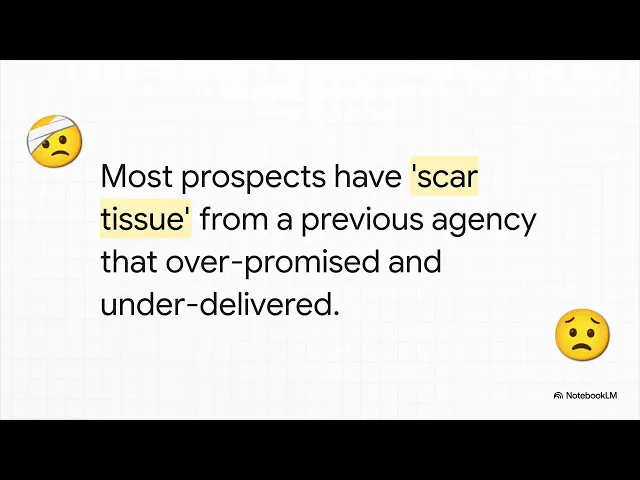
The average cost per lead across B2B industries is $198.44 (SeoProfy, Lead Generation Statistics 2026). For SEO agencies specifically, that number climbs higher because the sales cycle runs longer, the service is harder to evaluate before purchase, and most prospects carry scar tissue from a previous agency that over-promised and under-delivered.
That scar tissue matters more than anything else in this guide. Every tactic here is designed around one principle: the prospect who comes to you already believing you can help them is worth ten times the prospect you have to convince from scratch.
SEO generates a 748% ROI as a lead generation channel, and the average customer acquisition cost for SEO-driven leads sits at $647 (Ingeniom, SEO for Lead Generation 2026). Nurtured leads are 47% more likely to make a purchase, and companies with lead nurturing strategies see 50% more sales-qualified leads at 33% lower acquisition costs (Invesp, via Snovio Lead Generation Statistics 2026).
This guide covers the six channels that produce the highest-converting SEO leads, the qualification framework that prevents you from wasting time on bad-fit prospects, and the AI search dimension that opens an entirely new lead generation channel most agencies have not touched. For how these lead generation tactics connect to broader SEO strategy, see our SEO principles guide.
What Makes an SEO Lead Worth Pursuing?
Not all leads are equal. The distinction between a lead that closes at $3,000/month and one that wastes 15 hours of your team's time before ghosting comes down to three factors you can evaluate before the first call.
1. They already know they have an SEO problem: The prospect who searches "why did my organic traffic drop" is infinitely more valuable than one who responds to a cold email with "what is SEO?" The best leads are what you might call "Goldilocks Zone" prospects: businesses that already have some organic search traction but clear room for improvement. They are not starting from zero (those prospects need education before they can buy), and they are not already dominating their SERPs (those prospects do not need you). They sit in the middle, aware of SEO's value, frustrated by their current results, and ready for expert execution.
2. They have budget authority and realistic expectations: Incorrect budget estimations are one of the biggest causes of failed agency-client relationships. The fix is structural: offer 2-3 pricing tiers in your proposals so prospects can self-select based on their budget. This eliminates the negotiation dance where you spend hours scoping work only to discover the prospect's budget is one-fifth of what the project requires. Let the pricing tiers do the qualifying for you.
3. They operate in a market where SEO produces measurable ROI: A local dentist with 3 competitors benefits from SEO differently than a SaaS startup competing against 500 venture-backed companies for the same keywords. Match the prospect's market dynamics to your agency's strengths. The fastest way to close a lead is to show them a case study from their exact industry.
For understanding how to build conversion-focused content for these prospects, see our SEO funnel strategy guide.
6 Channels That Generate High-Converting SEO Leads
Channel 1: Rank for the problems your clients search for (not "SEO services")
This is the most important shift most agencies miss. Your ideal clients are not searching for "SEO agency." They are searching for the problems SEO solves.
A DUI attorney searches "how to get more clients for my law firm." An ecommerce founder searches "why is my Shopify store not getting traffic." A SaaS marketing director searches "how to rank for competitive keywords." These are the queries that produce SEO leads who already understand they have a problem. They just need someone who can solve it.
How to execute this:
Research 10-15 industries you serve and identify the specific business problems each one faces that SEO addresses. Create content targeting those problem-aware queries. If you serve ecommerce brands, write about Shopify conversion problems, product page indexing issues, and category page architecture. If you serve SaaS companies, write about trial-to-paid funnel optimization, competitive keyword strategy, and content-led growth systems.
The content should function as a commercial landing page disguised as a helpful guide. The reader arrives with a business problem, finds actionable advice that demonstrates your expertise, and sees a clear path to working with you at the bottom.
Do not target generic SEO keywords like "what is link building" or "SEO best practices." Your ideal clients (directors of marketing, founders, heads of growth) are not searching for those terms. They are searching for solutions to their revenue problems. The blog posts that attract SEO-savvy readers are not the ones that attract paying clients.
The conversion math: Organic search traffic converts at approximately 2.6% for B2B, higher than paid search at 1.5% and email at 2.4% (Martal Group, Conversion Rate Statistics 2026). Nearly half of all marketers say organic search is their most profitable channel.
For building the keyword research system behind this approach, see our keyword intent analysis guide. For organizing content into topic clusters that demonstrate expertise, see our topic clusters guide.
Channel 2: Turn LinkedIn into an inbound pipeline (not a cold outreach channel)
LinkedIn is the single most effective platform for B2B service providers to generate inbound leads. The organic ROI from LinkedIn marketing activity averages 229% across industries, with B2B Software/SaaS seeing 388% (Snovio, Lead Generation Statistics 2026).
But the way most agencies use LinkedIn destroys trust before it builds it. Connecting with a prospect and immediately sending them a message about your SEO services is the fastest way to guarantee they never hire you. They get 20+ of these messages per week. Yours is not special.
What works instead:
Post daily about what you learned on the job. Share wins with real Google Search Console screenshots (not Ahrefs data that anyone can pull for any website). Give away actionable frameworks, checklists, and breakdowns. The more knowledge you share publicly, the more you establish authority.
This feels counterintuitive. If you give away all your knowledge for free, why would anyone pay you? Because every business is different. Every website is different. The application of SEO strategies to a specific business context is vastly different from case to case. You can show someone every dot on the map, but the order in which those dots connect to their specific situation is the reason they hire you. Free content demonstrates that you know the dots. Paid work connects them.
Five practical LinkedIn tactics for SEO agencies:
Connect with a few ideal prospects each day. Prioritize people who actively comment on other posts, because they are more likely to engage with yours.
Never send blank connection requests. Write a short, genuine reason for connecting that references something specific about their business or content.
Share wins with GSC screenshots specifically. GSC access proves you actually worked on the site. Ahrefs data is public and proves nothing.
Focus on relationship building in comments and DMs, not selling. The sale happens naturally after weeks or months of demonstrated expertise.
Optimize your LinkedIn profile's "Services" section and headline so prospects can find you when they search for SEO help.
Also participate in SEO-related groups on LinkedIn, Facebook, and Slack communities where your prospects ask questions. Answering questions with genuine expertise (not promotional answers that link back to your service page) positions you as a trusted authority in spaces where your prospects already spend time.
Channel 3: Build case studies that make the client the hero
Case studies convert better than almost any other content type for SEO agencies because they answer the only question a prospect actually cares about: "Can you produce results for someone like me?"
But most agency case studies fail because they make the agency the hero of the story. The hero should always be the client. They had a problem, they navigated a solution, and they ended up in a measurably better position. Your agency was the guide that facilitated the change, not the protagonist.
What a high-converting case study includes:
The client's starting position (specific metrics: traffic, rankings, revenue)
The problem they faced in business terms (not SEO jargon)
The specific strategy you implemented (enough detail to demonstrate expertise, not so much that it reads like a playbook)
The measurable results with timeframes
A quote from the client about the business impact
Distribution strategy: Publish the full case study on your blog. Then extract individual data points and share them as standalone LinkedIn posts over 2-3 weeks. Finally, run a small-budget retargeting campaign showing the case study to people who visited your website but did not convert. Results-based posts consistently generate more inbound inquiries than educational posts, because results are proof and proof is what closes deals.
For creating case studies that also earn AI citations, see our GEO guide.
Channel 4: Offer free SEO audits that demonstrate expertise (not generic reports)
Free SEO audits are the most common lead generation tactic in the agency world. They are also the most commonly wasted opportunity, because most agencies send automated reports that look identical to what every other agency sends.
The audit that converts is the one that shows the prospect something they did not know about their own website. Pull three specific, fixable issues from their site. Show the estimated traffic and revenue impact of fixing those issues. Include one competitor comparison that reveals a gap the prospect can visualize.
This takes 20-30 minutes per prospect instead of the 30 seconds an automated tool takes. That investment is worth it because the prospect now sees you as someone who understands their specific situation, not a vendor running the same script on every website.
The format matters too. Do not send a 40-page PDF. Send a 2-page summary with three findings, three recommendations, and one competitor comparison. The prospect should be able to read it in 5 minutes and immediately see the value. The detailed work happens after they sign.
For the technical SEO issues to look for in audits, see our Google 404 crawling guide. For the structured data opportunities to highlight, see our schema markup guide.
Channel 5: Use paid search to capture high-intent prospects
Paid search works best as a complement to organic, not a replacement. The sweet spot for SEO agencies is targeting narrow, high-intent keywords where the prospect is actively looking for help.
Broad campaign: Target "SEO agency" and "SEO services" with clear pricing expectations in the ad copy. Including pricing in your ad titles (for example, "SEO services from $2,000/mo") pre-qualifies prospects by budget before they click. This reduces wasted ad spend on prospects who cannot afford your services and ensures the leads that come through are already in the right budget range.
Narrow campaign: Target service-specific terms like "ecommerce SEO audit," "local SEO for dentists," or "SaaS content strategy agency." These keywords attract prospects who know exactly what they need and are further in the buying cycle. The conversion rates on narrow campaigns are significantly higher because the intent is more refined.
The average CPC in Google Ads across industries is $5.26, with the average cost per lead at $70.11 (Snovio, Lead Generation Statistics 2026). For SEO agencies, the cost per lead from paid search is typically higher, but combining broad brand campaigns with narrow service-specific campaigns balances reach and conversion efficiency.
For optimizing the landing pages these ads drive to, see our landing page optimization guide.
Channel 6: Get cited in AI search to capture the next wave of prospects
This is the channel most agencies have not even considered. It is also the one with the most untapped potential in 2026.
BrightEdge data shows AI Overviews now trigger on approximately 48% of all tracked queries, up 58% year over year (BrightEdge, AI Overviews One-Year Report, February 2026). When a business owner asks ChatGPT or Perplexity "how do I improve my website's organic traffic?" the AI pulls citations from content across the web. If your agency's content is cited in that answer, you have just earned a lead from a channel your competitors are not even monitoring.
How to optimize for AI search lead generation:
Structure every blog post with question-based H2 headings and direct 40-word answers immediately after each heading
Include specific statistics, named tools, and real examples (the GEO research paper from Princeton/Georgia Tech found that content with statistics and citations boosts AI visibility by up to 40%)
Add FAQ schema to every service page and blog post
Build entity authority by getting mentioned on authoritative third-party sites, not just earning backlinks
The agencies investing in AI search visibility today are building a compounding advantage. Every piece of content that earns AI citations generates leads on autopilot from a channel that is growing 58% year over year while most competitors focus exclusively on traditional Google rankings.
For the complete AI search optimization framework, see our source gap analysis for AI search guide. For tracking AI search traffic in your analytics, see our GA4 guide for AI traffic.
How to Qualify SEO Leads Before You Invest Time in a Proposal
The biggest time sink for agencies is writing proposals for prospects who never close. Use this qualification framework to filter before you invest.
The 4-question qualification filter
1. Do they understand what SEO is? If you have to explain why organic traffic matters, this prospect requires education before they are ready to buy. Some agencies build educational funnels (beginner SEO guides that attract informational-intent leads and nurture them through email sequences until they are purchase-ready). Most agencies cannot afford the 6-12 month sales cycle this requires. Be honest about which model fits your business.
2. Do they have a realistic budget? SEO services range from $500/month for basic local SEO to $15,000+/month for enterprise campaigns. If a prospect's budget does not match the scope of work they need, no amount of sales skill makes the engagement profitable. Present 2-3 pricing tiers in your proposals and let prospects self-select. The ones who choose a tier are telling you they can afford it. The ones who ask for discounts on the lowest tier are telling you they cannot.
3. Do they have a timeline that matches SEO reality? A prospect who needs results in 30 days needs paid search, not SEO. Set expectations early: meaningful SEO results typically take 3-6 months for competitive keywords. Prospects who understand and accept this timeline are far more likely to become long-term retainer clients. The ones who push for faster timelines become the ones who churn at month 3.
4. Are they in a market where you have demonstrable experience? Targeting prospects from industries where you already have case studies shortens the sales cycle dramatically. You can show them results from a business like theirs. You can speak their language. You can estimate outcomes with more confidence. Every successful engagement in an industry makes the next prospect in that industry easier to close.
Segment leads by conversion potential
Lead type | Characteristics | Close rate | Best approach |
|---|---|---|---|
Inbound from content | Found you through your blog or social content, already trusts your expertise | Highest | 2-3 meetings to close |
Referral | Introduced by a satisfied client or industry peer | High | Warm intro, abbreviated sales process |
Free audit request | Interested but evaluating multiple agencies | Medium | Demonstrate unique value in audit findings |
Cold outreach response | Responded to your email or LinkedIn message | Low | Requires longer nurturing, multiple touchpoints |
Paid ad click | Clicked an ad, filled out a form | Medium-low | Fast follow-up critical (within 5 minutes) |
Inbound leads from content and referrals close fastest because the trust-building work is already done before the first meeting. Your content (or the referring client) has already established that initial relationship, which means you typically need only 2-3 meetings to move from introduction to signed contract. Outbound leads require significantly more nurturing through multi-channel retargeting, email sequences, and direct follow-up because the prospect does not yet know or trust your agency.
For building the content that creates inbound leads, see our content marketing strategy guide.
How to Turn Qualified Leads Into Paying Clients
Write proposals that address the prospect's business, not your services
The proposal that wins is the one that demonstrates you understand the prospect's specific situation. Talk to the prospect directly before writing anything. Get to know what they are looking for and clarify their expectations. Then tailor the proposal to address their specific pain points with your specific solutions.
A winning proposal structure:
The prospect's current situation (specific data from your audit: traffic trends, keyword gaps, technical issues)
The business impact (estimated revenue from ranking improvements, not just traffic projections)
Your recommended strategy (3-5 specific initiatives with timelines, not a generic "we do SEO")
Pricing options (2-3 tiers that align with different scopes of work)
Social proof (a case study from a similar industry with named metrics)
Follow up within 5 minutes of form submission
According to Verse research, 41% of companies find it challenging to quickly follow up on leads, and 44% of sales reps are too busy to follow up at all. Speed matters disproportionately: the agency that responds first wins the meeting. Set up automated email responses that acknowledge form submissions immediately, then follow up personally within 5 minutes during business hours. The prospect who just submitted a form is at peak interest. Every minute you wait, that interest decays.
Set expectations in the first meeting, not after the contract is signed
The agencies with the longest client retention rates are the ones that set realistic expectations before the engagement begins. Explain what SEO can and cannot do for their specific market. Show a realistic timeline. Be transparent about what success looks like at 3, 6, and 12 months. The temptation to over-promise during the sales process is real, but the cost of over-promising is a client who churns at month 4, leaves a negative review, and poisons your referral pipeline. Prospects who feel informed rather than sold to become clients who stay for years.
For the landing page optimization that maximizes these conversions, see our landing page optimization guide.
Your Next Move: Build One Lead Channel This Week
Pick one channel from this guide and commit to it for 90 days. If you have never posted on LinkedIn, start there. If you have blog content but no case studies, write one. If you have case studies but no free audit funnel, build it.
The agencies generating consistent inbound leads are not doing six things at once. They are doing one thing extremely well, and then layering additional channels on top of a foundation that already works.
Start with the channel where you can demonstrate expertise most credibly. For most agencies, that means publishing one piece of content per week that solves a specific problem your ideal client faces. In 90 days, that is 12 pieces of content working for you 24 hours a day.
If you need expert help building an inbound lead generation system powered by SEO and AI search visibility, Passionfruit's team builds content-driven growth systems for agencies, SaaS, and ecommerce brands. See our case studies for measurable results.
Frequently Asked Questions
What is the 3-3-3 rule in sales?
The 3-3-3 rule is a follow-up cadence framework. Contact a new lead within 3 minutes of their inquiry. Follow up 3 times in the first 3 days if they do not respond. Then move to a weekly cadence for 3 weeks before reassessing. For SEO agencies, the first contact speed matters most: the agency that responds first gets the meeting. Automated email acknowledgments buy you time, but personal follow-up within minutes dramatically increases close rates.
What is the 80/20 rule for SEO?
The 80/20 rule (Pareto principle) applied to SEO means that approximately 80% of your organic traffic and leads come from 20% of your content and keywords. For SEO agencies generating leads, this means identifying the small number of blog posts, service pages, and keywords that drive most of your inbound inquiries and doubling down on those rather than spreading effort evenly across all content. Audit your Google Search Console data to find your top-performing 20% and invest in expanding those topics.
How do you convert SEO leads into paying clients?
The conversion process starts before the first call. Qualify leads using the four-question filter (SEO understanding, budget, timeline, market fit). Personalize every proposal with specific data from a mini-audit of their website. Respond to inquiries within minutes, not hours. Present 2-3 pricing tiers that let the prospect self-select based on their budget. Include case studies from similar industries with named metrics. Set realistic expectations about timelines and outcomes. The agencies with the highest close rates are the ones where the prospect already trusts them before the sales conversation begins, because of content, social proof, or referrals.
Is SEO dead or evolving in 2026?
SEO is not dead. It is expanding. SEO generates a 748% ROI as a lead generation channel, and organic search remains the highest-converting traffic source for B2B at 2.6% conversion rate. What has changed is that SEO now includes AI search visibility. AI Overviews trigger on 48% of tracked queries, and AI search engines like ChatGPT and Perplexity are becoming primary research tools for B2B buyers. Agencies that optimize for both traditional Google rankings and AI citations capture leads from both channels. The agencies calling SEO "dead" are the ones still doing keyword stuffing and link schemes. The agencies calling it "evolving" are the ones generating more leads than ever.
How much should an SEO agency spend on its own lead generation?
Industry benchmarks suggest allocating 5-10% of revenue to marketing and lead generation. For a $500,000/year agency, that is $25,000-50,000 annually. The most efficient allocation for most agencies: invest 60% in content marketing and SEO (your own website), 20% in LinkedIn and social presence, 10% in paid search for high-intent keywords, and 10% in tools and automation. The ROI from thought-leadership SEO is among the highest of all B2B lead generation strategies because the content compounds over time.
What lead generation channels produce the highest quality SEO prospects?
The lead-to-MQL conversion rate averages 31% across channels, but the distribution varies dramatically. Client referrals, executive events, and SEO deliver the highest quality leads (Snovio, Lead Generation Statistics 2026). Content marketing produces leads at 74% effectiveness for B2B marketers, with distribution happening primarily through social media (89%), blogs (84%), and email newsletters (71%). Webinar registrants are 16% more likely to make a buying decision. The lowest quality leads come from purchased lists and untargeted cold outreach.
Should SEO agencies use cold email to generate leads?
Cold email can work, but at significant cost relative to inbound methods. Sending 200-300 cold emails per day takes enormous time, and the prospects who respond typically do not understand SEO and are incredibly difficult to sell to. You end up educating people for free before discovering they do not have the budget anyway. The exception: highly targeted, data-driven outreach to "Goldilocks Zone" prospects (businesses with some organic success but clear room for improvement) where you include specific audit findings about their website, not generic pitches. If the outreach email does not contain a finding the prospect did not already know, it is not targeted enough.