SEO
Join 500+ brands growing with Passionfruit!
Traffic from AI assistants and agents to retail sites grew 1,300% over the past year. AI-attributed orders on Shopify are up 11x since January 2025. Morgan Stanley projects autonomous agents could influence up to $385 billion in U.S. ecommerce spend by 2030 (ChannelEngine / Morgan Stanley, March 2026).
AI shopping is not a future event. It is a current channel.
ChatGPT now surfaces products inside conversations and redirects buyers to merchant storefronts to complete purchases. Shopify activated Agentic Storefronts by default for all stores, making every merchant's catalog discoverable in ChatGPT, Google AI Mode, Gemini, and Microsoft Copilot (Shopify, March 2026). Perplexity's Buy with Pro feature lets users research and purchase without leaving the chat. Google AI Mode checkout is rolling out for select retailers.
The products that appear in these conversations are not random. They are selected by AI agents based on structured product data, brand authority, reviews, pricing consistency, and content quality. Every one of those signals is a marketing responsibility.
This guide covers how agentic commerce works, how AI agents decide which products to recommend, and what marketing teams should do right now to make their products discoverable and buyable in AI conversations. For the full framework on optimizing content for AI citations, see our GEO guide.
What agentic commerce is and why it changes how customers find your products
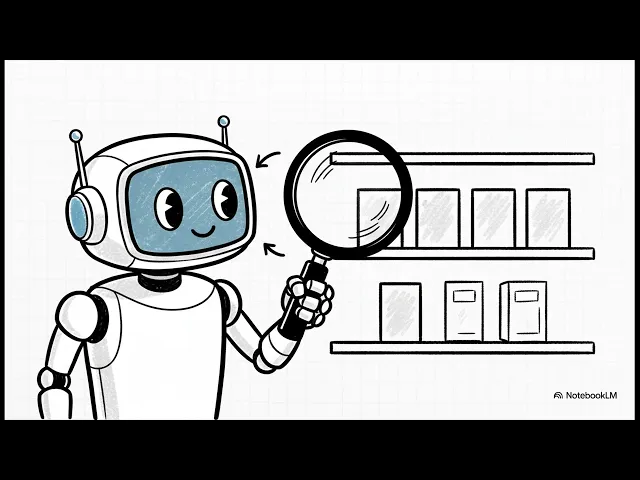
Agentic commerce is the practice of buying and selling products through AI-powered conversations. Instead of browsing a website or scrolling a marketplace, a buyer asks an AI assistant a question like "best noise-cancelling headphones under $200 for remote work" and receives a curated shortlist with product details, comparisons, and (on some platforms) the ability to purchase without leaving the chat.
Here is where agentic commerce is live as of April 2026:
Platform | What it does | How checkout works | Scale |
|---|---|---|---|
ChatGPT | Surfaces products from Shopify Catalog and merchant partners in conversation | Buyer completes purchase on merchant's storefront (in-app browser on mobile, separate tab on desktop) | 700M+ weekly users |
Perplexity | Shows product cards with reviews, pricing, pros/cons. Buy with Pro enables in-chat checkout via PayPal | In-chat for Pro merchants, redirect to merchant site for others | 45M monthly users, growing fastest for research queries |
Google AI Mode | Surfaces products with checkout for select retailers via Universal Commerce Protocol | In-chat checkout powered by Shopify or merchant's own system | Rolling out to select retailers |
Microsoft Copilot | Shows products with Copilot Checkout for Shopify merchants | In-chat checkout or redirect | 194% higher purchase completion when purchase intent is present |
Amazon Rufus | AI shopping assistant within Amazon's ecosystem | Standard Amazon checkout | Drove 40% of Black Friday 2025 sessions, influenced 66% of purchases |
The critical detail for marketing teams: OpenAI originally built Instant Checkout to let users buy entirely inside ChatGPT. It did not work. Onboarding merchants was "arduous," only about 30 Shopify merchants went live, and the experience was "prone to errors" according to Forrester analyst Emily Pfeiffer. Gartner analyst Bob Hetu told CNBC that "OpenAI underestimated how difficult the enablement of transactions was going to be" (CNBC, March 2026).
So OpenAI pivoted. ChatGPT now handles discovery and recommendation. Checkout redirects to the merchant's own storefront. Shopify confirmed that buyers will find products in ChatGPT and "complete purchases on the merchant's own online store" (Modern Retail, March 2026).
This pivot makes AI visibility a marketing problem, not an engineering problem. The products that get recommended in ChatGPT conversations are determined by the same signals marketing teams already manage: product data quality, brand authority, reviews, content, and pricing consistency. The brands that get recommended win the click. The brands that are invisible lose the deal before it starts.
How AI agents decide which products to recommend and which to ignore
AI shopping agents do not display search results the way Google does. They curate a shortlist, typically 3-5 products per query, with a synthesized explanation of why each product is relevant. Getting onto that shortlist is the new equivalent of ranking on page one. Except the shortlist is shorter.
Here is what the data tells us about the signals AI agents use:
Brand authority and web presence matter more than you think: Ahrefs found that branded web mentions correlated 0.664 with AI visibility, significantly higher than backlinks (0.218) or domain rating (0.326). AI agents confidently recommend brands they encounter across multiple authoritative sources. Brands that exist only on their own website are harder for AI to trust.
Structured product data determines discoverability: AI agents cannot recommend products they cannot parse. Incomplete product titles, missing attributes, vague descriptions, and absent GTINs make products invisible to agentic systems. As ChannelEngine CEO Jorrit Steinz put it: "What's changing is who's reading it. Today it's marketplace algorithms. Tomorrow it's AI agents influencing purchasing decisions."
Reviews and social proof are not optional: ChannelEngine's 2026 survey of 4,500 marketplace shoppers found that 3 in 5 shoppers hesitate to purchase if a product has no reviews, even on marketplaces they already trust (ChannelEngine, Marketplace Shopping Behavior Report 2026). AI agents weight this signal too: products with stronger review profiles are more likely to be recommended.
Pricing consistency across channels builds trust: 95% of shoppers notice price differences for identical products across marketplaces. AI agents cross-reference pricing across sources. Inconsistent pricing creates doubt in the AI's assessment and in the buyer's decision. If your product shows one price on your site and a different price on Amazon, the AI is less likely to recommend it confidently.
Content freshness and depth signal authority: The Princeton/Georgia Tech GEO research found that content with statistics, citations, and structured evidence boosts AI visibility by up to 40% (Aggarwal et al., ACM SIGKDD 2024). Practitioners tracking AI visibility report that content updated within 30 days receives 3.2x more AI citations than stale content.
For how to build the content authority that AI agents reward, see our topic clusters guide and content marketing strategy.
The trust gap between AI discovery and AI purchase
ChannelEngine surveyed 4,500 marketplace shoppers across the US, UK, France, Germany, and the Netherlands for their Marketplace Shopping Behavior Report 2026. The findings reveal a clear pattern:
58% of shoppers have used AI tools to research products
37% have started a purchase journey through an AI assistant
Only 17% feel comfortable completing a purchase through AI
AI shapes the shortlist. Marketplaces and merchant storefronts are where confidence is confirmed and purchases are completed.
ChannelEngine calls this the "Confidence Economy." Shoppers explore widely across AI tools, social platforms, marketplaces, and brand sites, but they buy where they feel most certain about what they will receive, what it will cost, and how reliably it will arrive.
What this means for marketing teams: Being recommended by ChatGPT or Perplexity is step one. Having the product page, reviews, pricing transparency, and fulfillment signals that close the deal is step two. The checkout pivot (discovery in AI, purchase on your storefront) makes your on-site conversion optimization just as important as your AI visibility.
If your product gets recommended by ChatGPT but the buyer arrives at a product page with a thin description, no reviews, hidden pricing, and unclear shipping terms, you lose the sale that AI already won for you. The marketing team's job now spans both sides: AI discoverability and conversion readiness.
For how to optimize the pages that close these deals, see our landing page optimization guide.
How to make your products discoverable in AI shopping conversations
Five specific steps, in priority order.
1. Get your products into the systems AI agents access
AI agents pull product information from structured sources. If your products are not in those sources, they cannot be recommended.
For Shopify merchants, Agentic Storefronts are activated by default. Your products are already discoverable in ChatGPT, Google AI Mode, Gemini, and Copilot through Shopify Catalog, which uses specialized LLMs to categorize and standardize product data. Check your Shopify admin under Settings > Sales Channels to verify.
For non-Shopify brands, evaluate the Shopify Agentic Plan (lets you list products in Shopify Catalog without migrating your ecommerce platform), the Perplexity Merchant Program (free, gives you control over how products appear in Perplexity Shopping), and direct feed optimization for Google Merchant Center (powers Google AI Mode shopping).
If you sell on Amazon, note that Amazon has blocked AI agents including ChatGPT from accessing its product data. Your Amazon listings are not visible to external AI shopping agents. Your brand site and other marketplace presence are the product data sources AI agents can access.
2. Audit and complete your product data
AI agents parse product attributes to determine relevance. Incomplete data means invisibility.
Run an audit of every field: product titles (specific and descriptive, not clever), descriptions (features, specifications, materials, use cases), GTINs and product identifiers (essential for AI matching), images (multiple angles, lifestyle context, not just white background), reviews and Q&A (social proof that AI agents use to assess quality), and return/shipping policies (trust signals AI agents surface to buyers).
The brands that show up consistently across AI platforms are those with product data that is accurate, complete, and structured so machines can read it.
3. Build AI visibility through content and earned media
AI agents do not just read product feeds. They synthesize information from across the web to assess brand authority and product credibility.
Ahrefs found 65.3% of ChatGPT's most-cited pages come from domains with Domain Rating above 80. Muck Rack found 85% of non-paid AI citations come from earned media, not owned content.
Build content clusters around the purchase-intent questions in your category ("best [category] for [use case]"). Earn editorial coverage in publications AI engines already trust. Ensure your brand appears consistently across review platforms, industry publications, and community discussions. These signals compound into the brand authority that makes AI agents confident enough to recommend you.
For monitoring which prompts mention your products and where competitors appear instead, use Passionfruit Labs to track AI visibility across ChatGPT, Perplexity, Gemini, Claude, and Google AI Overviews. See our AI brand monitoring guide for the complete framework.
4. Maintain pricing and inventory consistency across all channels
AI agents cross-reference data across sources. If your product shows $89 on your site, $95 on Amazon, and "out of stock" on a marketplace feed that has not been updated, the AI either surfaces the inconsistency to the buyer (destroying confidence) or skips your product entirely.
Synchronized pricing, real-time inventory, and consistent product information across every channel where your products appear is no longer a nice-to-have. It is a prerequisite for AI commerce visibility.
5. Optimize your storefront for the buyer that AI sends you
With ChatGPT redirecting checkout to merchant storefronts, your product pages are now the final conversion surface for AI-referred traffic. These buyers arrive with high intent (the AI already recommended your product) but they will bounce if the experience does not match the expectation the AI set.
Ensure product pages match the information AI surfaced (pricing, availability, features). Display reviews prominently. Make checkout frictionless (the average cart abandonment rate is 70%, per Baymard Institute). Show clear shipping costs and timelines (91% of shoppers say free shipping influences their purchase decision).
Track AI-referred traffic separately in GA4 to measure conversion rates and revenue from this channel. See our GA4 AI traffic tracking guide for setup instructions.
What marketing teams should do this quarter
Three immediate actions.
Verify your AI channel distribution: If you are on Shopify, confirm Agentic Storefronts are active and your product data is syncing correctly to Shopify Catalog. If you are not on Shopify, evaluate the Agentic Plan or ensure your marketplace feeds and site data are structured for AI parsing. Check your products' visibility in ChatGPT by asking purchase-intent queries in your category and seeing whether your brand appears.
Start monitoring AI shopping visibility now: Use Passionfruit Labs to track which purchase-intent prompts mention your products, which mention competitors, and where you are completely invisible. The brands establishing AI commerce visibility now are building an advantage that compounds as AI shopping adoption grows. Plans start at $19/month with a 7-day free trial.
Audit your product pages for AI-referred conversion readiness: The buyer arriving from a ChatGPT recommendation has different expectations than a buyer arriving from Google organic. They have already been told why your product is relevant. Your job is to confirm and close, not to re-sell. Ensure product pages load fast, match the AI's recommendation framing, display reviews and social proof prominently, and offer frictionless checkout.
Final thoughts
Agentic commerce is not replacing marketplaces or brand storefronts. It is adding a new discovery and recommendation layer on top of them. The checkout pivot proves this: OpenAI tried building transactions inside the chat and pulled back. Discovery happens in AI. Purchases happen on your site.
That makes AI visibility the new top-of-funnel for ecommerce. The brands that show up when a buyer asks ChatGPT "best [product] for [use case]" capture the intent. The brands that are invisible lose the sale before they know it existed.
The signals that determine AI visibility (product data quality, brand authority, reviews, pricing consistency, content depth) are all marketing-controlled. The teams that treat agentic commerce as a channel to monitor, optimize, and measure will compound an advantage as adoption scales from early to mainstream.
Start monitoring today with Passionfruit Labs (7-day free trial, plans from $19/month). If you need help building the AI visibility and content strategy that gets your products recommended, talk to Passionfruit's GEO team. See our case studies.
FAQs
What is agentic commerce?
Agentic commerce is the buying and selling of products through AI-powered conversations. Instead of browsing websites or marketplaces, buyers ask AI assistants like ChatGPT, Perplexity, Google Gemini, or Microsoft Copilot for product recommendations and can complete purchases within or directly from those conversations. The term "agentic" refers to AI acting as an agent on behalf of the buyer, handling discovery, comparison, and (in some cases) checkout. OpenAI and Stripe built the Agentic Commerce Protocol (ACP) as an open standard for these transactions. Shopify and Google co-developed the Universal Commerce Protocol (UCP) for the same purpose.
Can customers buy products directly inside ChatGPT?
As of April 2026, the model has evolved. OpenAI originally launched Instant Checkout inside ChatGPT with Etsy sellers in September 2025, but scaled it back in March 2026 due to onboarding difficulties and user experience issues. The current approach is: products are discoverable inside ChatGPT conversations through Shopify Catalog and merchant partners, but purchases redirect to the merchant's own storefront (in-app browser on mobile, separate browser tab on desktop). Perplexity's Buy with Pro feature still allows in-chat checkout for select merchants via PayPal. Google AI Mode checkout is rolling out for select retailers.
How do AI agents decide which products to recommend?
AI shopping agents select products based on structured product data quality (complete titles, descriptions, attributes, GTINs), brand authority signals (web mentions, earned media, editorial coverage), reviews and social proof (presence and quality), pricing consistency across channels, availability and fulfillment reliability, and content depth on the merchant's site. Products are ranked by relevance to the user's query, not by advertising spend. Both OpenAI and Perplexity have stated that product recommendations are organic and unsponsored.
What is the Agentic Commerce Protocol?
The Agentic Commerce Protocol (ACP) is an open standard developed by OpenAI and Stripe that enables AI agents, people, and businesses to work together to complete purchases. When a buyer decides to purchase through ChatGPT, the protocol passes necessary details to the merchant's backend, the merchant accepts or declines the order, processes payment via their existing provider, and handles fulfillment. Separately, Shopify and Google co-developed the Universal Commerce Protocol (UCP), which serves a similar function across Google AI Mode and other AI surfaces. Both protocols are designed to keep merchants in control of the customer relationship.
Do I need to be on Shopify to sell through AI channels?
No. Shopify merchants have the easiest path (Agentic Storefronts are activated by default), but non-Shopify brands can participate through multiple routes: the Shopify Agentic Plan (list products in Shopify Catalog without migrating your ecommerce platform), the Perplexity Merchant Program (free, direct product data sharing with Perplexity), Google Merchant Center (powers Google AI Mode shopping results), or by implementing the Agentic Commerce Protocol directly with Stripe. The key requirement across all channels is structured, accurate, real-time product data.
How do I track whether AI agents are recommending my products?
Traditional analytics (GA4, Search Console) can track referral traffic when buyers click through from AI platforms, but they miss the 80% of AI mentions that do not include clickable links. Dedicated AI visibility monitoring tools like Passionfruit Labs track how often your brand and products appear across ChatGPT, Perplexity, Gemini, Claude, and Google AI Overviews, including purchase-intent queries where AI agents recommend your competitors instead of you. For setup details, see our AI brand monitoring guide.
What should ecommerce brands prioritize first for agentic commerce?
Product data quality. Before investing in AI visibility content or earned media, ensure your product titles are specific and descriptive, all attributes are complete, GTINs are accurate, images cover multiple angles and contexts, reviews are present on your product pages, and pricing is consistent across every channel where your products appear. AI agents cannot recommend products they cannot parse, and they will not confidently recommend products with incomplete or inconsistent data. Once your product data is clean, build AI visibility through content clusters and earned media, then monitor your visibility across AI platforms to find and close gaps.