E-Commerce
Executive Summary
The brand’s growth depended on one critical factor: entering the institutional research process before competitors.
Schools and education decision-makers don’t buy immediately. They research, compare, evaluate, and shortlist vendors over weeks or months.
The brand had strong programs. But it wasn’t consistently present during the earliest discovery phase—when schools begin evaluating STEM workshop providers.
By restructuring its discovery infrastructure and aligning its content with institutional research behavior, the brand dramatically increased inbound inquiry volume, driven primarily by non-branded discovery.
Performance Snapshot (3 Months)
Metric | Impact |
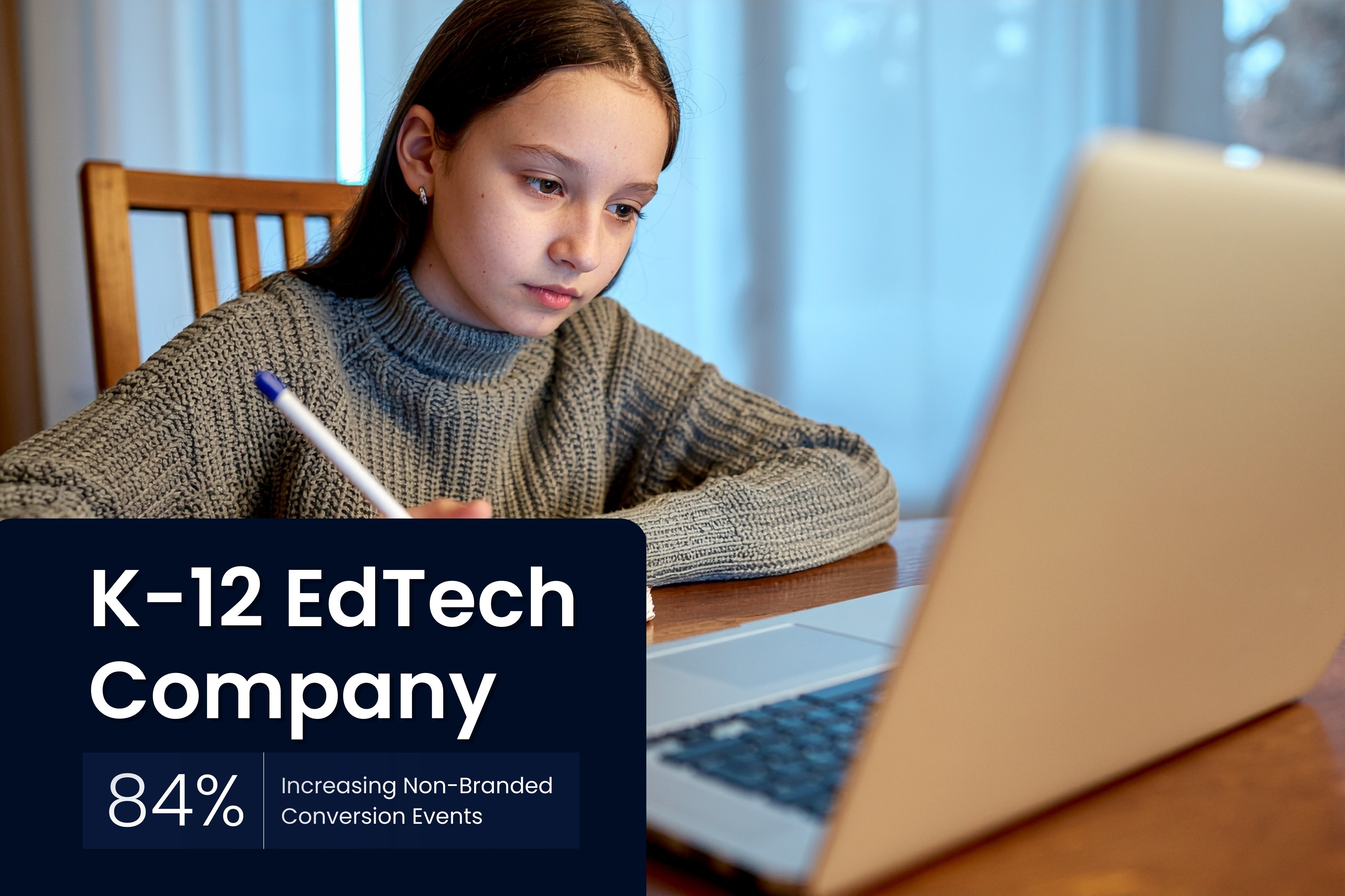
Non-Branded Key Conversion Events | +84% |
Total Key Conversion Events | +45% |
AI Sessions | +111% |
Keywords Ranked | +73% |
Non-Branded Clicks | +15% |
About The Brand
The brand is a prominent K-12 EdTech company that provides mobile STEM labs, experiential learning workshops, and career readiness programs for schools. Founded in 2015 and headquartered in North Carolina, the company has grown into one of the most recognized names in hands-on STEM education across 125+ countries globally, helping over 500,000 students across more than 1,000 schools.
The brand’s programs are backed by partnerships with Fortune 500 companies and major research institutions, including collaborations with organizations like Google and MITRE. The company operates a fleet of mobile technology labs and maintains a network of 100+ STEM experts—designers, engineers, and educators.
The brand crossed $1 million in revenue within its first two years and does more than $6 million in annual revenue today, funded through a combination of grants, industry partnerships, and direct institutional sales. Approximately 80% of partner schools receive programs at no cost, supported by corporate sponsors.
Its customers are institutional buyers:
School administrators
District coordinators
Education program directors
These buyers follow structured evaluation processes before selecting providers. Discovery isn’t driven by brand awareness. It’s driven by solution-based research queries like “STEM workshops for schools,” “mobile STEM lab programs,” and “engineering workshops for students.”
Capturing these discovery moments determines pipeline growth.
The Growth Challenge
The brand wasn’t constrained by product-market fit. It was constrained by discovery positioning. Three structural gaps limited inbound institutional demand.
1. The Brand Was Not Entering the Institutional Research Process Early Enough
Institutional buyers begin vendor discovery using non-branded queries. The brand’s visibility during this phase was inconsistent. This meant fewer opportunities to enter evaluation pipelines. Competitors capturing early discovery had an advantage.
2. Discovery Was Not Efficiently Converting Into Institutional Inquiries
Even when users discovered the brand, structural limitations in content and site architecture reduced conversion efficiency. Discovery was happening. But inquiry volume wasn’t scaling proportionally. This created pipeline inefficiency.
3. Generative Discovery Environments Were Emerging as a New Entry Point
Education buyers increasingly use AI platforms to research program providers. The brand’s content was not fully optimized for generative extraction and recommendation. This limited its presence in these high-intent discovery environments.
What Our Client Said
“Very positive about the progress made. The Passionfruit team operates at an affordable price point while putting in a tremendous amount of effort to support the site’s success. Overall, it has been a very positive experience.”
—Co-Founder & CEO
The Strategy: Enter the Institutional Evaluation Process Earlier
1. High-Intent Institutional Discovery Pages Were Prioritized
Content and landing pages were aligned with institutional research queries. This ensured the brand appeared during the earliest stages of vendor evaluation. As visibility increased, institutional inquiry volume followed.
2. Conversion Pathways Were Rebuilt to Capture Inquiry Demand
Discovery pages were restructured to reduce friction between research and inquiry. This included:
Clearer inquiry pathways
Improved structural clarity
Stronger alignment between discovery intent and conversion flow
This improved conversion efficiency.
3. Discovery Coverage Expanded Across Institutional Research Queries
Keyword footprint increased significantly, allowing the brand to enter more institutional research workflows. This increased pipeline entry points. Keyword rankings increased 73%, dramatically expanding discovery coverage.
4. Generative Discovery Eligibility Was Improved
Content structure was optimized to improve inclusion in AI-generated recommendations. This resulted in a 111% increase in AI-driven sessions. These discovery environments disproportionately influence early vendor evaluation.
The Results
The impact was immediate and measurable. Institutional inquiry volume increased significantly.
Non-branded key conversion events increased 84%
Total key conversion events increased 45%
Keywords ranked increased 73%
AI-driven sessions increased 111%
Non-branded clicks increased 15%
The brand was now entering institutional research workflows earlier and more frequently.
Why This Worked
Strategic Change | Business Effect |
Prioritized institutional discovery queries | Increased pipeline entry from new schools |
Rebuilt discovery-to-inquiry pathways | Improved inquiry conversion efficiency |
Expanded keyword footprint across STEM program queries | Increased discovery coverage |
Improved generative discovery readiness | Increased visibility in emerging institutional research channels |
Business Impact
The brand significantly strengthened its institutional demand generation engine.
Non-branded conversion events grew substantially faster than overall conversion volume—demonstrating increased acquisition of new institutional customers.
The brand now enters the vendor evaluation process earlier, improving its ability to capture and convert institutional demand.
Discovery is now a reliable pipeline driver.