Analytics
What is Share of Voice?
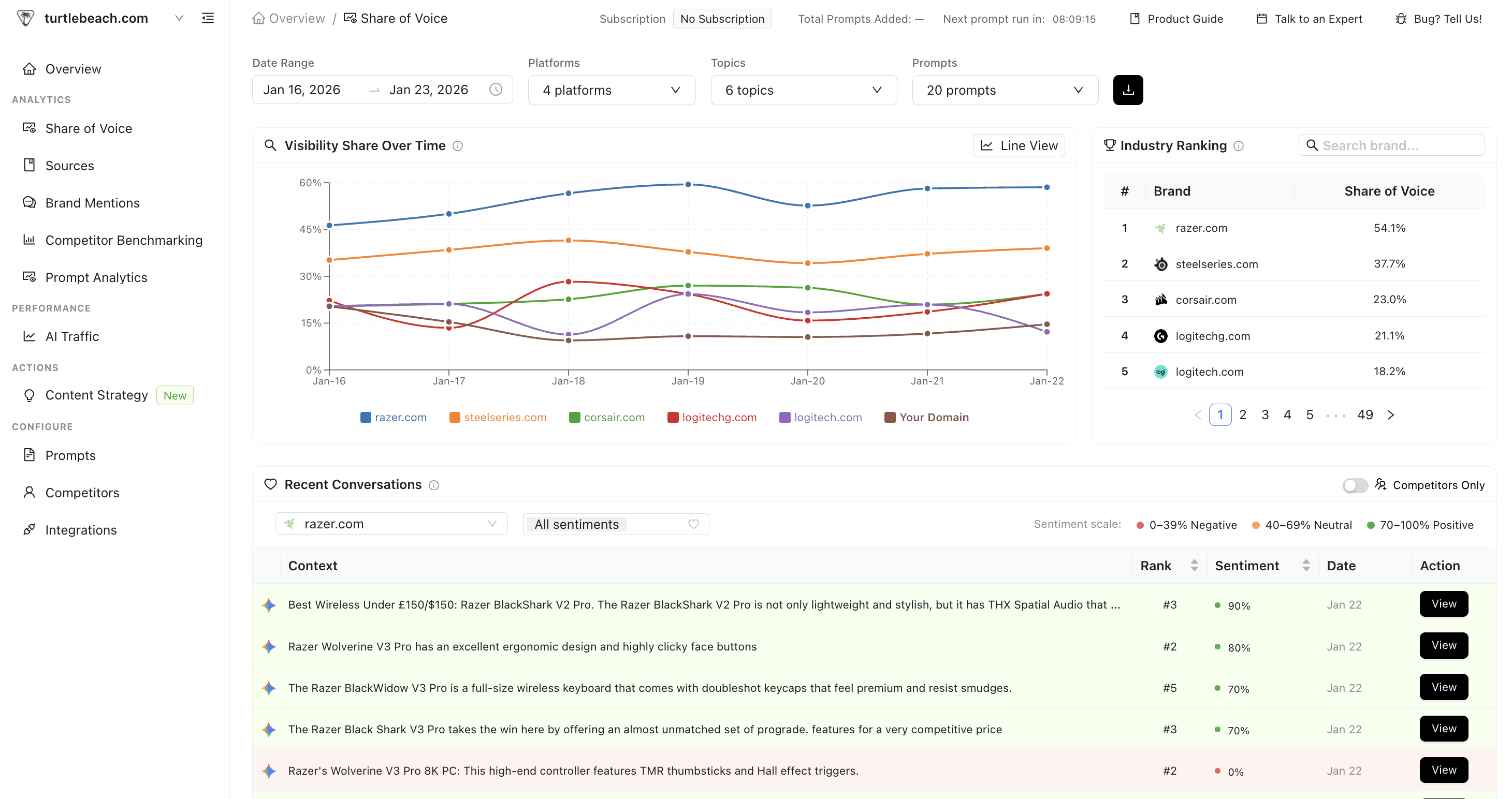
Share of Voice (SoV) shows how often your brand appears in AI-generated answers across major platforms (ChatGPT, Gemini, Claude, Perplexity)—as a percentage of total brand mentions in your industry.
How to Use:
Navigate to the “ANALYTICS” tab and select “Share of Voice.”
Calculation: SoV = (Your brand’s appearances in AI answers / Total answers mentioning tracked brands) × 100
Top 4 brands apart from your brand with the highest SoV are plotted in the graph with your brand highlighted.
Change date range, filter by prompt, platform, or topics for focused analysis.
Pro Tips:
If SoV shows zero, add relevant prompts. Read more here on how to do so.
What is a Citation?
A citation is when a page from your domain or your competitor’s is expressly referenced by an AI engine in its answers—proof of content authority and trust.
How to Use:
Go to “ANALYTICS > Citations.”
Filter by topics, prompts, date, and platform.
View top-cited domains and pages across AI engines.
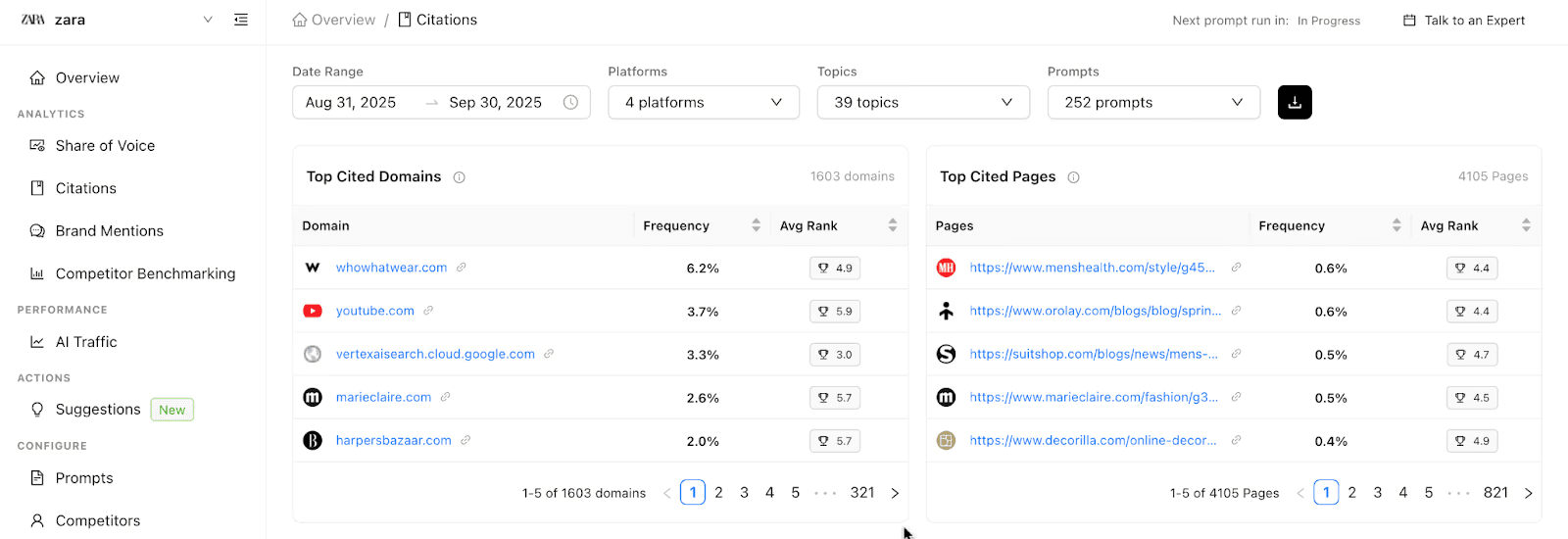
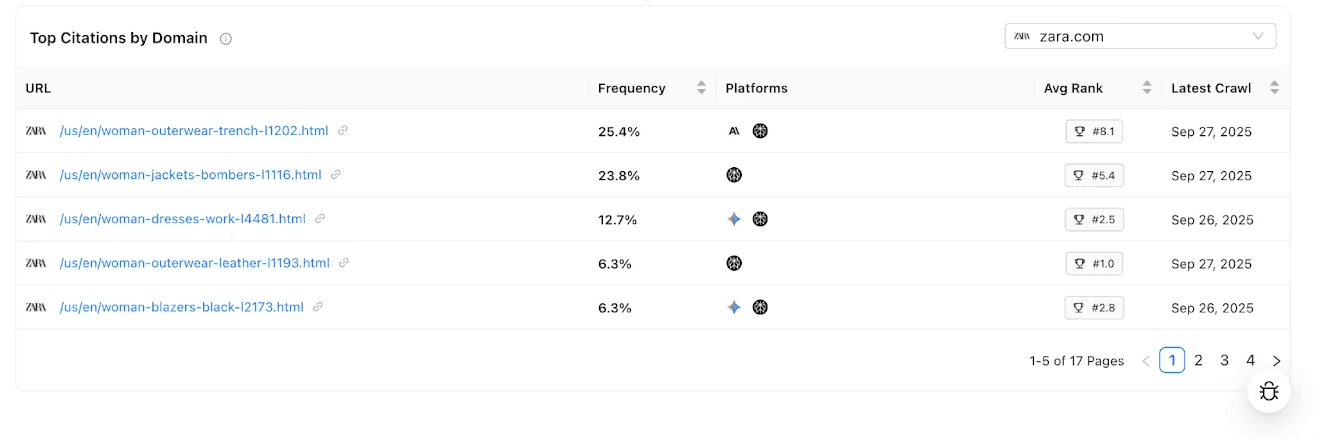
See which specific links from your site/competitors are being cited.
Simply, click on the drop down menu within the table "Top Citations by Domain" and select which brand you are interested in.
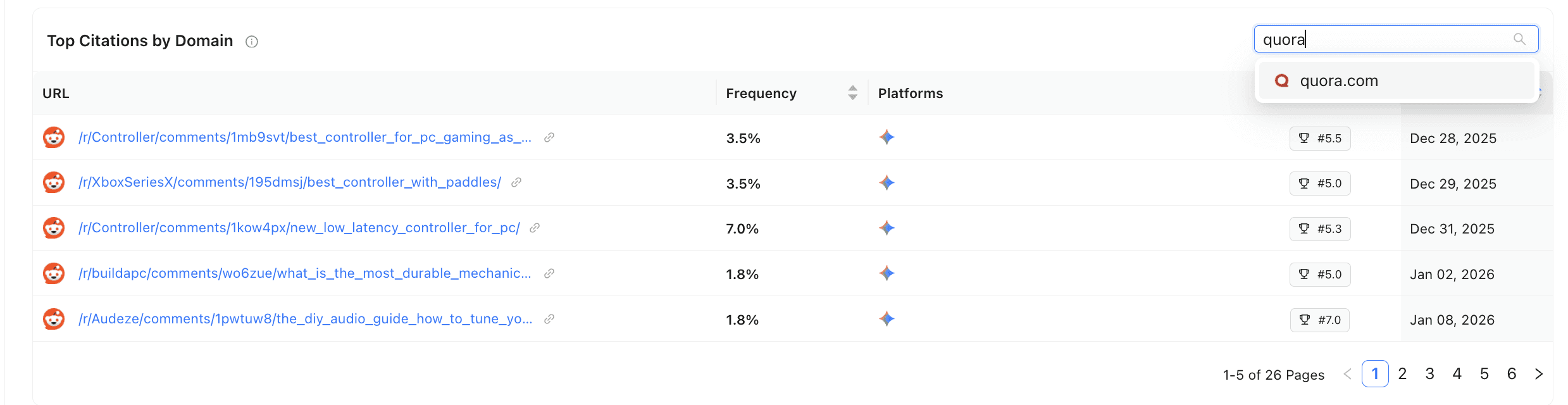
From this drop down menu, you can also check which social media posts LLMs love to cite. Since Reddit, Wikipedia, Quora and Youtube content gets cited heavily on LLMs, engaging on these content pieces or recreating them becomes essential.
Usage Tip:
Improve your chances of being cited by publishing detailed, well-researched pages and earning backlinks from trusted sites.
What is a Brand Mention?
Anytime your brand is referenced in an AI answer—even without a link—it counts as a mention. This signals awareness, authority, and AI-favorability.
How to Use:
Select “Brand Mentions” from the "ANALYTICS" menu.
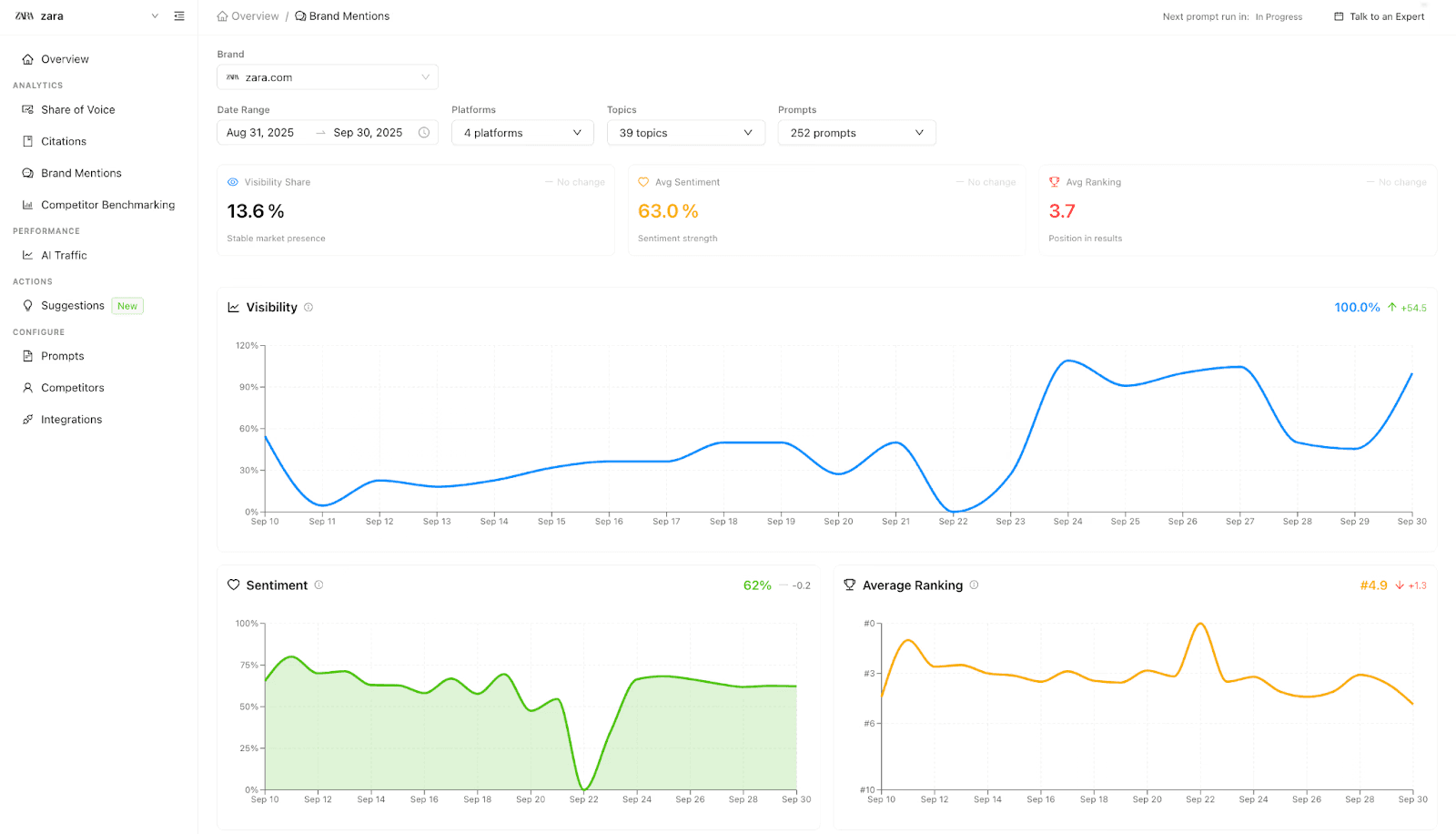
See your average ranking position, average sentiment, total visibility share across all the prompts.
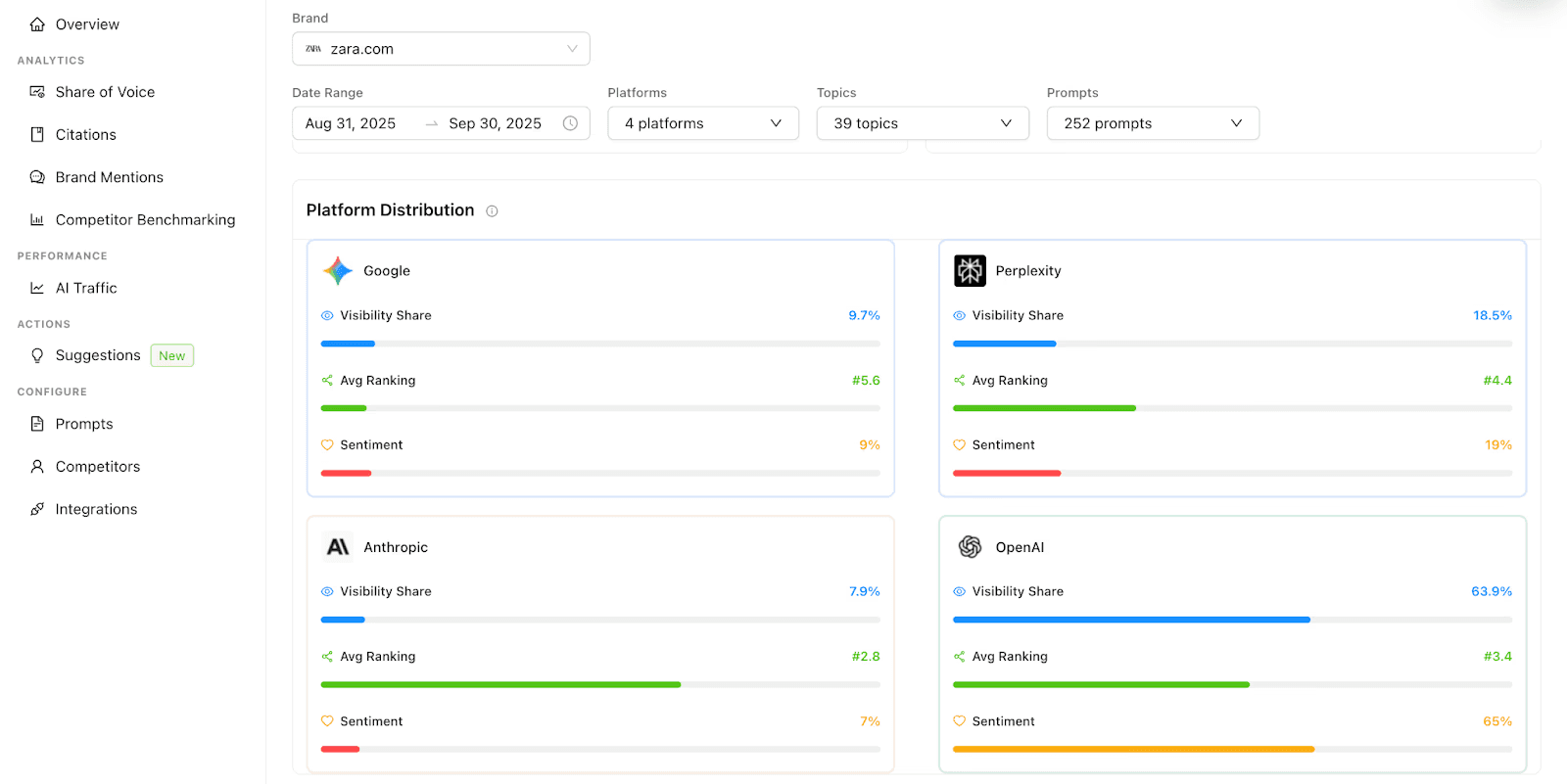
See “Platform Distribution” of mentions across different AI platforms
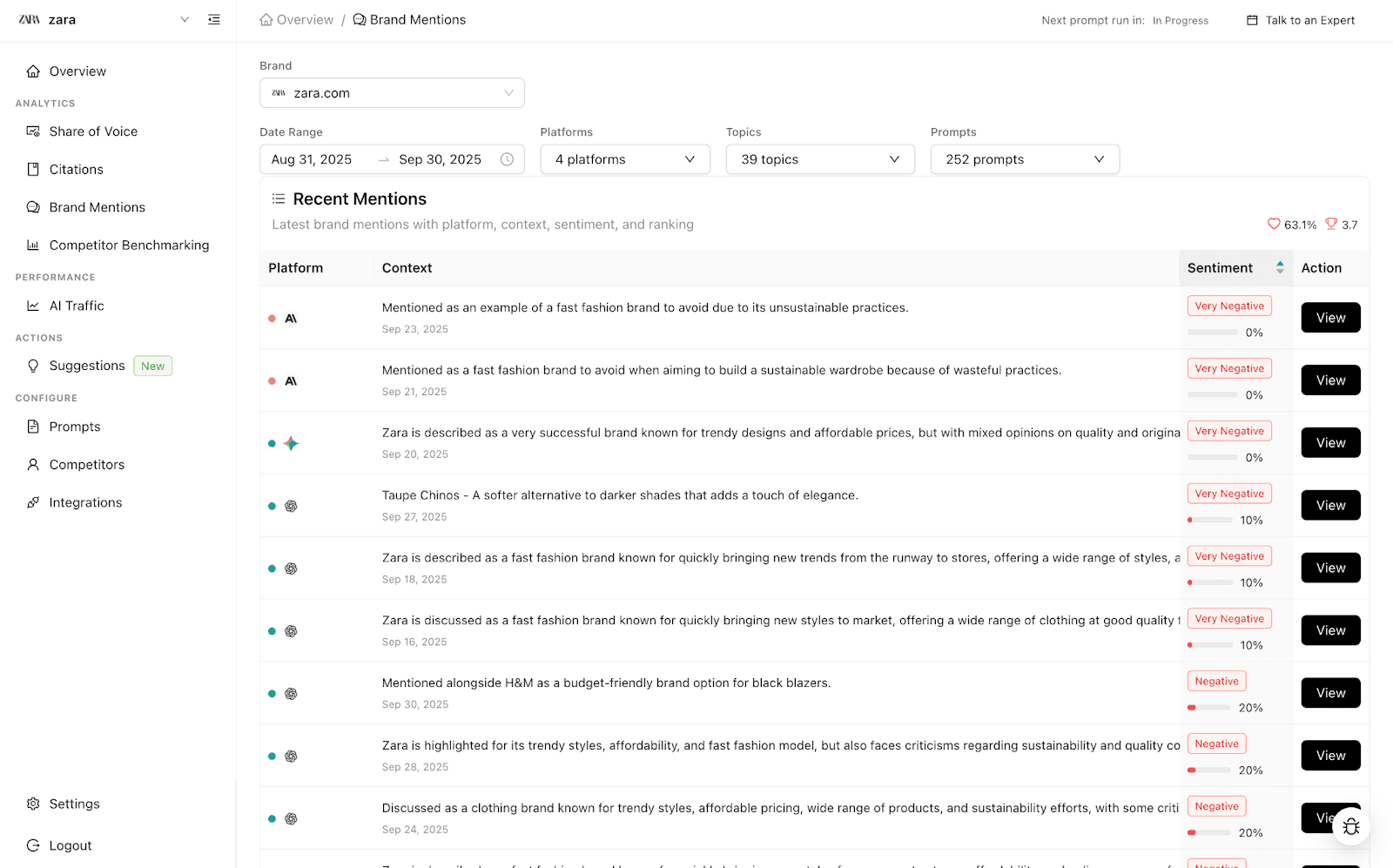
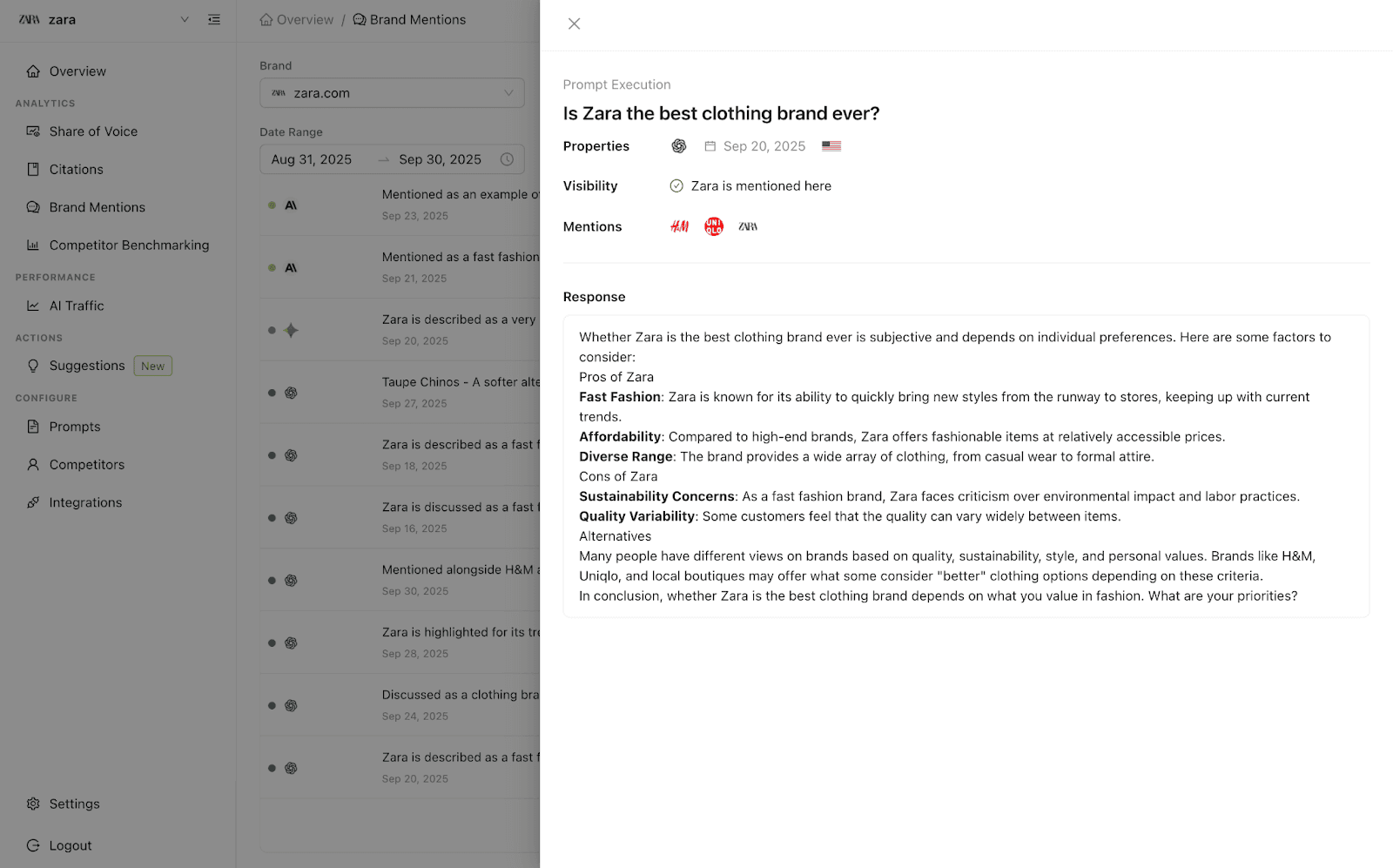
The “Recent Mentions” feed lets you read exact AI answers where your brand and competitors are mentioned along with the sentiment of the answer. You can sort your answers by negative sentiment.
Usage Tip:
Analyze sentiment to spot positive/negative trends.
Add prompts that target new regions, products, or customer pain points for broader monitoring.
Prompt Analytics provides granular, prompt-level performance tracking across AI platforms. For each individual prompt you're monitoring, you can see exactly which sources AI engines are citing, how your brand ranks, what sentiment it receives, and how visibility is distributed across platforms.
How to Use:
Navigate to "ANALYTICS" → "Prompt Analytics."
From the drop down menu at the top, select a specific prompt from your tracked list to analyze its performance.
View key metrics at a glance:
Share of Voice: Your brand's presence in AI responses for this prompt
Avg. Sentiment: Overall sentiment score (0-100% positive)
Avg. Ranking: Your typical position when mentioned in AI answers
Filter by date range, platforms - ChatGPT, Gemini, Claude, Perplexity (depending on the plan), and topics for deeper analysis.

Key Features:
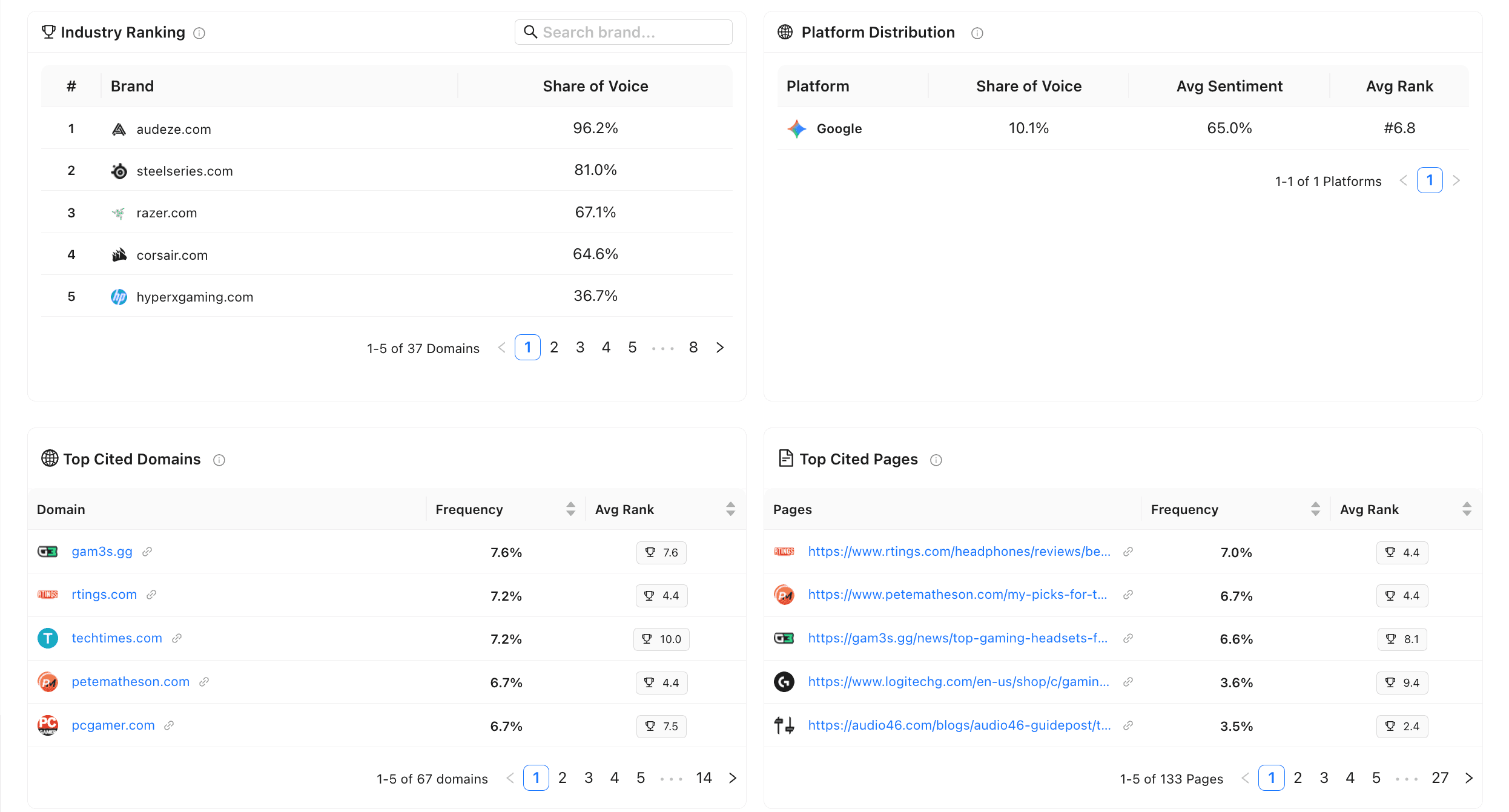
Industry Ranking – Compare your brand's Share of Voice against competitors for this specific prompt to understand your competitive position.
Platform Distribution – Visualize how mentions are spread across different AI platforms (Anthropic, Google, OpenAI, Perplexity) with sentiment scores and average rankings per platform.
Top Cited Domains & Pages – Drill down to see:
Which domains get cited most often
Specific page URLs receiving citations
Frequency percentages and ranking positions
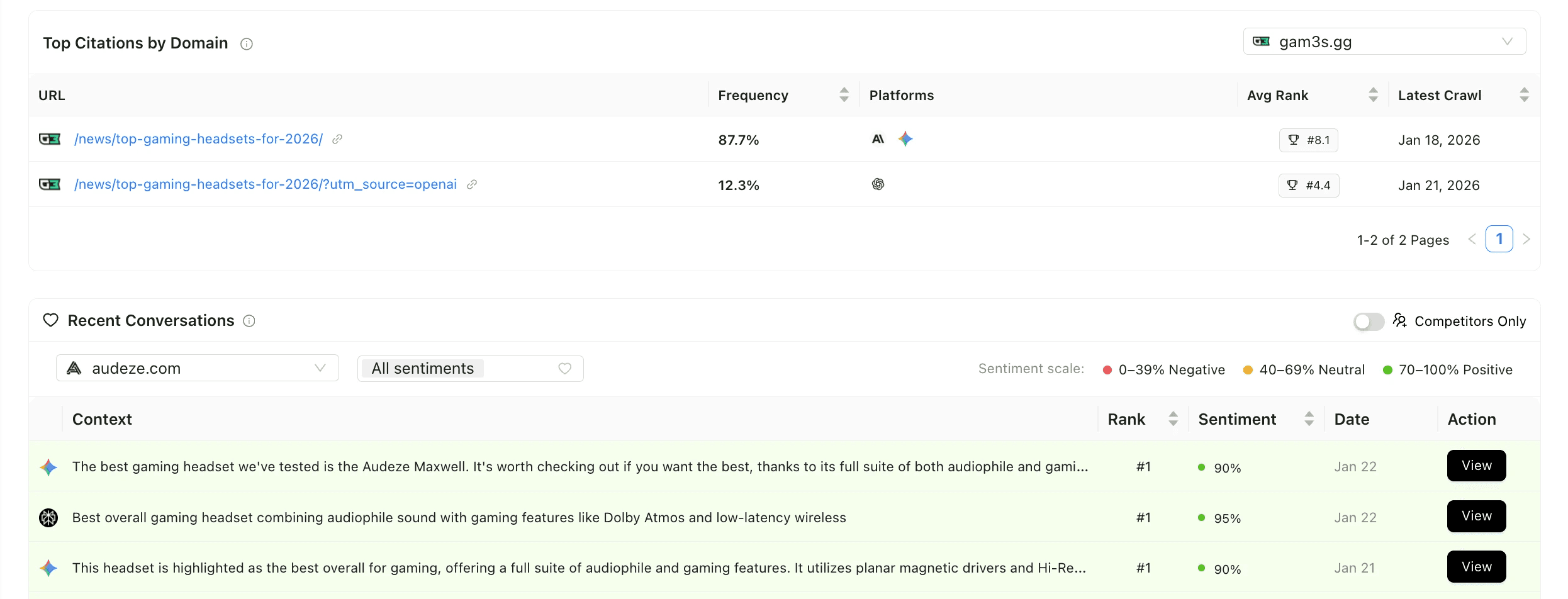
Top Citations by Domain – from the drop down, you may select any domain you want to analyze. For each domain cited, see what exact pages are cited most frequently within it , along with:
Platform icons showing where citations appear
Average ranking position and latest crawl date
Recent Conversations – from the drop down, you may select any domain you want to analyze. Read actual AI-generated responses where the brand selected appears, including:
Full conversation context
Ranking position (#1, #2, #3, etc.)
Sentiment score for each mention
Date of response
Ability to sort by negative sentiment to identify reputation risks
Pro Tips:
Use prompt-level data to identify which queries drive the strongest brand visibility and sentiment.
If a prompt shows low performance, analyze competitor citations to understand what content types AI engines prefer. Then reverse engineer the top performing pages for your brand.
Monitor "Recent Conversations" regularly to catch negative sentiment early and address reputation issues.
Compare platform distribution to see which AI engines favor your content—then optimize specifically for underperforming platforms.