SEO
Join 500+ brands growing with Passionfruit!
Category pages serve dual purposes in e-commerce websites, functioning as both navigational hubs for shoppers and landing pages for search traffic. Proper optimization helps these pages rank for commercial keywords while guiding customers toward products matching their purchase intent.
What Are Category Pages in E-commerce?
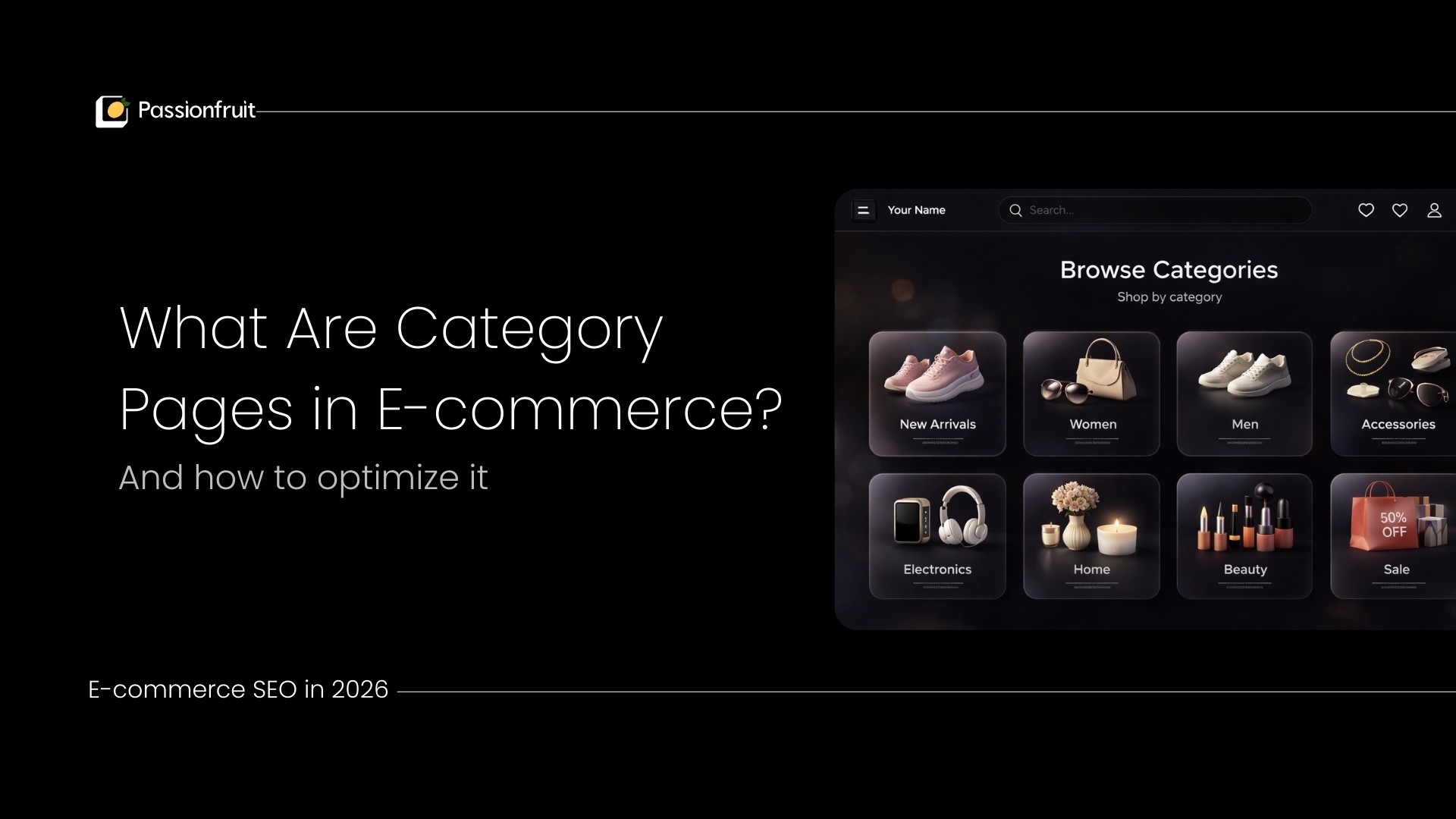
Category pages organize product catalogs into logical collections based on product type, use case, or brand. Unlike product pages that showcase specific items, category pages display multiple related products, helping shoppers browse options before making purchase decisions.
According to Nosto, 69% of online shoppers go straight to the search bar when visiting e-commerce sites, but 80% leave due to a poor experience. Category pages represent critical touchpoints where site structure, content quality, and technical optimization impact both search rankings and conversion rates.
Why Category Pages Matter for E-commerce SEO
Category pages target broader commercial keywords that attract shoppers in research and comparison phases. Search terms like "wireless headphones" or "running shoes" indicate purchase intent without specifying exact products, making category pages ideal for capturing this traffic.
Category pages deliver strategic SEO value through:
Topical authority: Search engines treat category pages as hubs signaling site expertise in specific product areas
Internal link distribution: Each product linked from a category receives ranking signals, creating compound SEO benefits as catalogs grow
Crawl efficiency: Well-structured hierarchies help search engines understand inventory organization and content relationships
Understanding how Google indexing works clarifies why proper category architecture impacts crawlability and ranking potential across your entire e-commerce site.
How to Optimize Category Pages for Search Rankings
Optimizing category pages requires a systematic approach addressing both technical infrastructure and user experience. Each step below builds upon the previous one to create category pages that rank well and convert effectively.
Research Commercial Keywords for Category Targeting
Category page keyword research focuses on broader commercial terms rather than specific product names. Shoppers searching category-level keywords typically compare options rather than seeking exact items.
Commercial keywords often include modifiers indicating research intent:
Product type keywords: "yoga mats," "coffee makers," "hiking boots."
Comparative terms: "best wireless earbuds," top-rated laptops."
Use case searches: "shoes for running," "cookware for induction stoves."
Tools like Google Keyword Planner reveal search volume for category terms, while competitor analysis shows which keywords drive traffic to similar category pages.
Build Clean URL Structures and Site Hierarchy
Clean URL architecture serves both technical and user experience purposes. URLs structured as /category/subcategory/ create logical pathways that search engines follow to understand site organization.
Example hierarchical structure:
store.com/womens/(main category)store.com/womens/athletic-wear/(subcategory)store.com/womens/athletic-wear/yoga-pants/(specific category)
Shallow site architecture keeps important pages within three clicks of the homepage, improving crawl efficiency and distributing link authority effectively.
Write Unique Category Content With Strategic Keywords
Category content helps search engines understand page topics while helping shoppers confirm they've found relevant product collections. Introductory text above product grids explains category benefits, while additional content blocks below listings cover use cases, buying guides, or product comparisons.
Content length typically ranges between 150 and 300 words to provide sufficient context without overwhelming product displays. Learning how structured data increases search visibility helps extend content strategy beyond visible text to include technical markup.
Optimize Title Tags and Meta Descriptions
Title tags and meta descriptions represent category pages in search results before users click. Well-crafted metadata improves click-through rates by clearly communicating page content and unique value propositions.
Title tag optimization includes primary category keywords within 60 characters, plus the brand name for recognition. Meta descriptions under 160 characters highlight benefits like free shipping, exclusive brands, or curated selections. Testing different meta description approaches through Google Search Console reveals which messaging drives the highest click-through rates.
Implement Schema Markup for Rich Results
Structured data translates page content into formats that search engines process more efficiently. Key schema types for category pages include Product schema for featured items, ItemList schema describing product collections, Breadcrumb schema showing site hierarchy, and AggregateRating schema for category-level reviews.
Validation through Google's Rich Results Test confirms proper implementation. AI-friendly schema markup strategies become increasingly relevant as AI-powered search platforms influence discovery.
Control Faceted Navigation With Canonical Tags
Filter systems create user-friendly browsing experiences but generate crawl budget challenges. Each filter combination creates unique URLs, multiplying indexable pages exponentially without adding genuine content value.
Canonical tag implementation addresses this by pointing filtered variations back to main category URLs:
<link rel="canonical" href="https://yourstore.com/category/main-url">
Strategic noindex application or robots.txt blocking prevents search engines from wasting crawl resources on low-value filter combinations.
Optimize Images for Performance and Accessibility
Visual content dominates category pages, making image optimization critical for both performance and accessibility. Compress images to WebP format, add descriptive alt text including product attributes, implement lazy loading for below-fold images, and use multiple product views showing context.
PageSpeed Insights testing reveals performance bottlenecks. Google confirmed page experience as a ranking factor, making Core Web Vitals optimization essential for competitive rankings.
Add FAQ Sections Targeting Question Keywords
The Frequently Asked Questions sections address common category-specific queries while targeting question-based keywords. Tools like Semrush or Ahrefs identify questions with search volume worth answering.
FAQ content provides immediate value to shoppers, targets People Also Ask opportunities, enables FAQPage schema markup, and answers objections preventing purchases. Concise answers paired with the FAQPage schema increase rich snippet eligibility.
Build Strategic Internal Links
Strategic internal linking distributes authority from high-traffic pages to category pages needing ranking support. Homepage links, blog post references, and product page connections create pathways spreading link equity throughout your site.
Effective internal linking uses descriptive anchor text, including category keywords rather than generic phrases. Understanding why sites lose organic traffic helps identify when insufficient internal linking limits category page performance.
Monitor and Refine Category Page Performance
Category page optimization requires continuous refinement as inventory changes, seasonal trends emerge, and customer behavior evolves. Regular performance monitoring through Search Console reveals ranking changes, traffic patterns, and indexing issues requiring attention.
Passionfruit specializes in revenue-focused SEO for e-commerce brands and Direct-to-Consumer (D2C) companies, optimizing category pages across traditional search and AI-powered discovery platforms.
Schedule a free SEO audit to identify category page optimization opportunities.
Frequently Asked Questions
What makes category page SEO different from product page SEO?
Category pages target broader commercial keywords, attracting shoppers comparing options, while product pages focus on specific items. Content strategies differ accordingly, with categories emphasizing collection benefits.
How much content should category pages include?
Category pages typically include 150-300 words, balancing search engine context needs with user experience priorities. Content should enhance rather than obstruct product browsing.
Should filtered category pages be indexed?
Use canonical tags pointing filter variations to main category URLs. Only index filter combinations creating unique value, blocking others through noindex tags or robots.txt.
How often should category pages be updated?
Review category pages quarterly minimum, updating when adding product lines, addressing seasonal changes, or responding to customer questions from reviews and support interactions.
Can category pages rank for competitive keywords?
Category pages rank effectively for commercial keywords when optimized with unique content, strategic internal links, proper schema markup, and supported by overall site authority.