SEO
Join 500+ brands growing with Passionfruit!
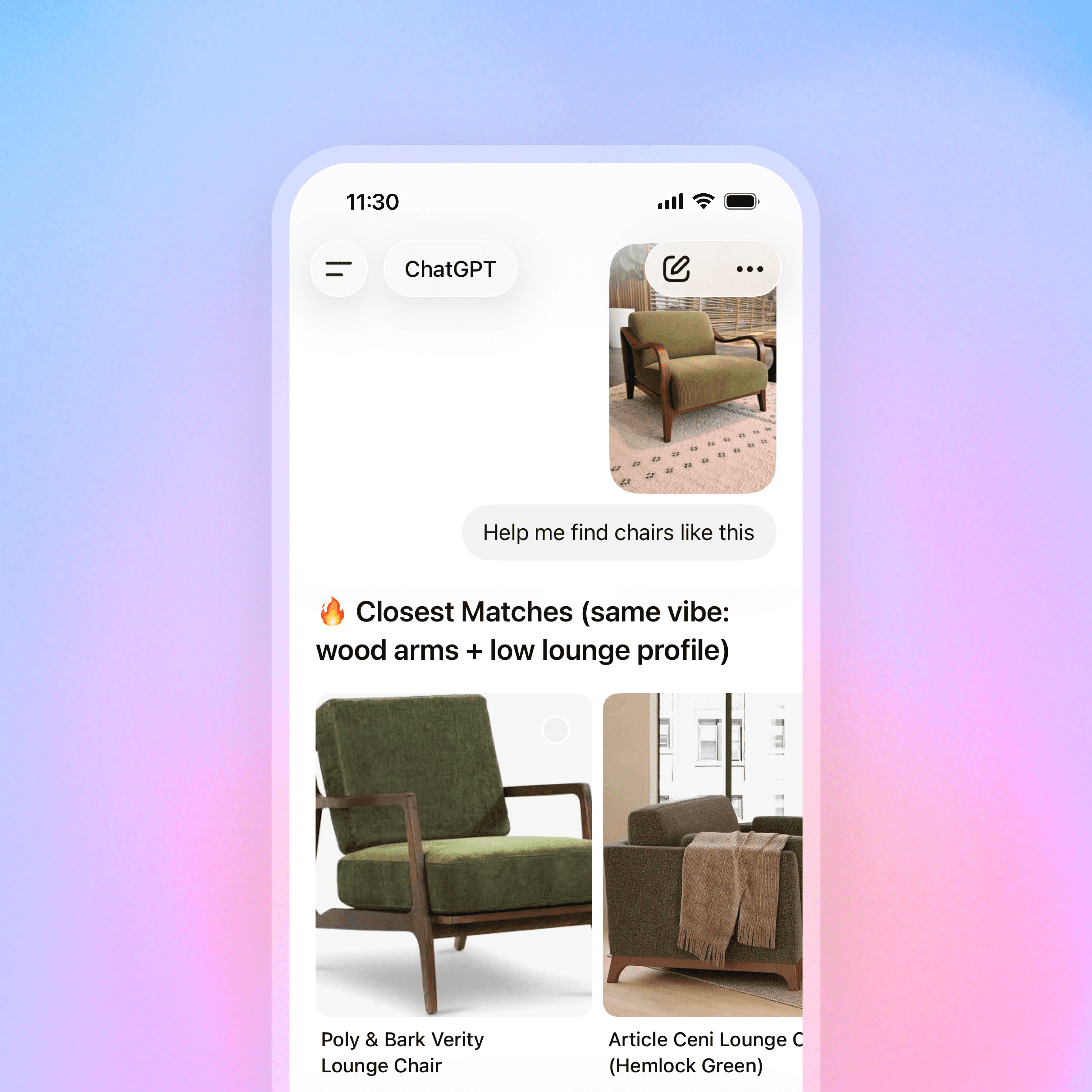
On May 12, 2026, OpenAI shipped product feed ads inside ChatGPT. Retailers can now connect a product catalog to the platform, set filters for which items are eligible, and let ChatGPT auto-generate sponsored placements from product names, images, and catalog attributes. The placement itself looks unchanged to the user, a sponsored card below the AI's answer, clearly labelled. What changed is everything behind the placement.
For ecommerce brands, the May 12 announcement is the inflection point. Running ChatGPT Ads at catalog scale was impractical until now because campaigns had to be built one product at a time. The platform can now handle up to 1 million SKUs per advertiser. A mid-market retailer with 50,000 items can actually participate. The piece below covers what shipped, what the new eligibility test looks like, and what catalog work retailers should start immediately.
What ChatGPT product feed ads are
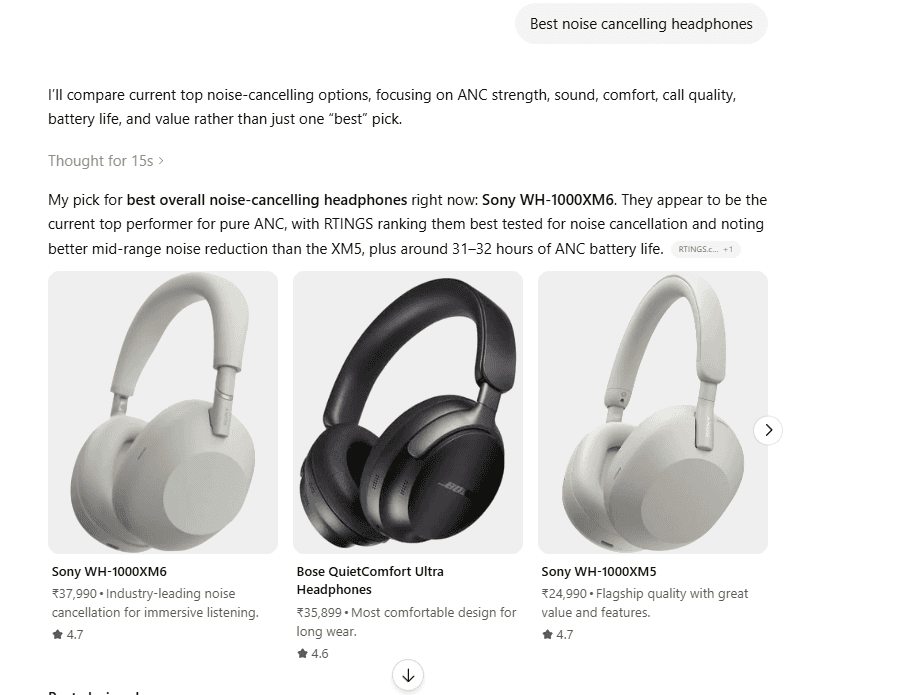
ChatGPT product feed ads are sponsored placements that the platform generates automatically from a retailer's structured product catalog, instead of requiring the advertiser to build creatives item by item. Retailers connect a feed, apply eligibility filters, and the system creates ads using product names, images, and catalog attributes. The placement appears below ChatGPT's response as a clearly labelled sponsored card.
The mechanics mirror feed-based shopping campaigns retailers already use on Google Shopping and Meta Advantage+ Shopping. Retailers connect their existing structured product file, the platform parses it, and ads are generated from the attribute data. No new creative production work is required beyond what most ecommerce brands already do for paid shopping.
The launch went live with Criteo as OpenAI's first ad-tech partner, and at least one retailer is already running campaigns through Criteo. StackAdapt confirmed feed parity, with Yang Han, the company's CTO, telling Digiday that the same feed his platform already supports will flow directly into OpenAI once supported.
The 100-product sample is the new eligibility test
OpenAI is gating new ecommerce partners by requiring a 100-product sample feed submission before accepting the full catalog. If the sample passes review, the rest of the catalog is connected. If the sample fails, the advertiser cannot run product feed ads at all until the underlying data is cleaned up.
That review step is unusual in paid shopping. Google does not gate Merchant Center this way. Meta does not gate the Shop catalog this way. Amazon does not gate seller listings this way. All three platforms have post-submission review that disapproves individual items, but none refuse to onboard a brand because the first 100 SKUs read like noise.
OpenAI is filtering at the source on purpose. The sponsored card surfaces directly beneath a conversational answer, where a single bad product recommendation reflects on ChatGPT's credibility, not the retailer's. The data quality control has to happen upstream of the auction. Catalog readiness is now an eligibility prerequisite for paid placement, not just a delivery optimization. Retailers with thin or messy feeds are locked out of the channel entirely until the underlying data is fixed.
Your Google Shopping feed works on both surfaces
ChatGPT accepts the same structured product file retailers already send to Google Shopping, with no reformatting required. One feed, two surfaces. The work that has gone into Google Merchant Center optimization compounds, and the brands that have neglected feed hygiene see the gap show up across two paid channels instead of one.
The same catalog also feeds ChatGPT's organic shopping recommendations, per OpenAI's merchant documentation. So a single investment in clean structured feed data drives three returns: Google Shopping performance, ChatGPT paid placement eligibility, and ChatGPT organic citation. A retailer already investing in generative engine optimization on the organic side has most of the work done for the paid side.
What good catalog data means for conversational matching
Conversational ad matching evaluates attributes the keyword era largely ignored. Material, finish, occasion suitability, gift context, lifestyle category, dimensions, and certifications all become matching signals when the user describes their need in plain language instead of typing a query.
Consider a user asking ChatGPT for "a wedding gift under $200 that looks more expensive than it is." The model decomposes that into intent fragments: occasion (wedding), price ceiling ($200), perceived value (looks expensive), gift context (recipient unknown). The product title, brand, and price are floor-level signals. The attributes that decide whether a product is surfaced are the descriptive ones, the ones most retail catalogs leave empty.
The operational fix is to audit attribute completeness across the existing Google Shopping feed before submitting the 100-product sample. Sparse material, age_group, gender, color, pattern, and occasion fields are the most common reasons a sample fails review. The same data quality investment that earns clean paid eligibility also determines whether organic AI search surfaces cite your products, which makes catalog work load-bearing for both paid and earned visibility across AI surfaces. The foundational SEO and feed structuring work continues to do the heavy lifting underneath all three channels.
The full performance ad stack is now in place
Three operational pieces have landed inside ChatGPT Ads in the past 60 days. Stacked together, they signal that OpenAI is building a Meta-style performance advertising business, not a brand-only premium placement.
The recent timeline:
April 21, 2026: CPC bidding launched, with recommended max bids of $3 to $5 per click.
May 5, 2026: Self-serve Ads Manager opened to U.S. advertisers, $50,000 minimum spend eliminated, Conversions API and pixel-based attribution rolled out.
May 12, 2026: Product feed automation launched, with a 1 million SKU ceiling per advertiser.
Next on the roadmap: CPA bidding, currently in development.
David Dugan, the executive OpenAI hired to lead the ads business, was one of the main architects of Meta's performance advertising business. The product feed integration is the piece that lets a large-catalog retailer actually participate at scale.
Here is how ChatGPT product feed ads compare to Google Shopping campaigns on the dimensions retailers care about most.
Dimension | Google Shopping | ChatGPT product feed ads |
|---|---|---|
Trigger | Keyword query in search | Conversational intent in chat |
Feed format | Google Merchant Center spec | Same spec, reusable |
Eligibility | Submit feed, items reviewed individually | 100-product sample required upfront |
SKU ceiling | Effectively unlimited | 1 million per advertiser |
Bid models | CPC, smart bidding, ROAS | CPC and CPM, CPA in development |
Ad placement | SERP carousel and listings | Sponsored card under AI response |
Attribute weight | Title, brand, GTIN, price | Material, occasion, finish, lifestyle, plus core attributes |
The two channels are not substitutes. The right framing is complementary surfaces with different match signals, different bid environments, and different reporting maturity. Retailers should treat ChatGPT product feed ads as the second feed-driven channel in the paid stack, not a replacement for the first.
How to prepare your catalog for ChatGPT product feed ads
Catalog readiness is the gating step. Before applying for product feed ads, retailers should audit attribute completeness, fix the gaps, and curate the 100-SKU sample with care. A practical sequence:
Audit your existing Google Shopping feed for empty attribute fields. Material, age_group, gender, pattern, color, occasion, and certification fields are the most common gaps.
Pick 100 SKUs you would be proud to onboard with. Highest margin, cleanest data, strongest images. Avoid defaulting to the first 100 by SKU number.
Rewrite product descriptions for conversational matching, not keyword density. Communicate use cases, gift suitability, occasion, and lifestyle context in plain language.
Install OpenAI's JavaScript pixel or Conversions API on your product and confirmation pages before launch. Conversion measurement starts the day campaigns go live.
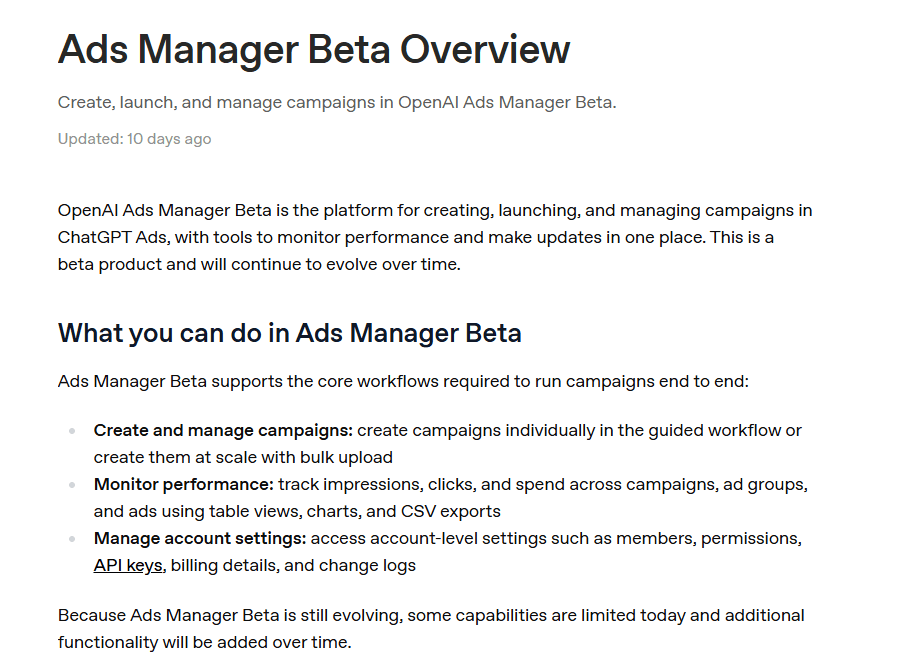
Connect to OpenAI through Ads Manager Beta at ads.openai.com, or via an ad-tech partner like Criteo or StackAdapt for managed setup.
A May 10, 2026 panel at Consensus Miami underlined the size of the readiness gap. PayPal's Frank Keller cited fresh survey data showing 95% of merchants see AI agent traffic on their sites, but only 20% have machine-readable catalogs. The gap was an organic-discovery story a week ago. After May 12, the same gap is a paid-eligibility story too.
The catalog work that earns a clean 100-product sample is the same work that earns organic citation in ChatGPT's unpaid product recommendations. The investment pays out across paid and organic AI surfaces simultaneously, and the budget conversation across SEO, GEO, AEO, and paid AI placements becomes one conversation about a single underlying asset.
Make your catalog the reason you win, not the reason you wait
Three months ago, "AI visibility" was something marketers could push to next year's planning cycle. After May 12, the same catalog data that decides whether a brand gets cited organically inside ChatGPT also decides whether the brand can run paid product ads on the surface where 800 million people interact every week. One asset, two outcomes, and a clear consequence for retailers who postpone the work.
The cleanest first step is not a campaign. The cleanest first step is a current-state audit of the product catalog and AI visibility across ChatGPT, Perplexity, Gemini, and Google AI Overviews. Look at how Passionfruit's GEO team approaches the audit, see the citation tracking inside Passionfruit Labs, and talk to the team before the next budget cycle locks in.
Frequently asked questions
What are ChatGPT product feed ads?
ChatGPT product feed ads are sponsored placements that OpenAI generates automatically from a retailer's connected product catalog. Retailers upload a structured feed, set filters for eligible products, and the system creates ads using product names, images, and attributes. The ad appears as a labelled sponsored card below ChatGPT's organic response.
How are ChatGPT product feed ads different from Google Shopping?
Google Shopping matches ads to keyword queries entered in search. ChatGPT product feed ads match to conversational intent inside a live chat session. The two channels share a feed format but use different match signals, different bid environments, and different placement formats. Retailers can run both with the same underlying catalog.
What is the 100-product sample requirement?
OpenAI asks new ecommerce partners to submit a sample feed of around 100 products before connecting the full catalog. The sample is reviewed for data completeness, image quality, and attribute accuracy. If the sample passes review, the rest of the catalog is accepted. If the sample fails, the advertiser cannot run product feed ads until the underlying feed is cleaned up.
Can I use my existing Google Shopping feed for ChatGPT ads?
Yes. OpenAI accepts the same structured product file retailers already send to Google Merchant Center, with no reformatting required. Brands that have invested in clean Google Shopping feeds have most of the work done for ChatGPT eligibility already. Brands with sparse or messy feeds need to fix the underlying data before the 100-product sample will pass review.
How much do ChatGPT product feed ads cost?
ChatGPT Ads support both CPC and CPM bidding. Recommended starting CPC max bid is $3 to $5. Default max CPM is $60, though some auctions have cleared as low as $25 since the self-serve manager opened. The minimum spend requirement was eliminated on May 5, 2026, so retailers can test the channel without a large upfront commitment. A CPA bidding option is in development.
When will ChatGPT product feed ads roll out beyond the United States?
ChatGPT Ads launched in the U.S. on February 9, 2026 and expanded to Canada, Australia, and New Zealand in March 2026. OpenAI has not announced a specific timeline for global rollout of the product feed format, though the company has signalled further market expansion across the rest of 2026. Retailers outside currently supported markets can prepare catalogs now to be ready when access opens.