SEO
Join 500+ brands growing with Passionfruit!
ChatGPT Ads are sponsored placements that appear inside ChatGPT, below the AI's response, when a user's conversation matches an advertiser's offer. OpenAI started testing them in the United States on February 9, 2026 and has since opened the platform to advertisers of any size, added CPC bidding, and connected product feeds for retailers. The model is moving fast, and most coverage written before May 2026 is already partly out of date.
Our piece below is a clean explainer that reflects the state of the platform as of mid-May 2026, separates the rules that have held steady from the rules that have already changed, and explains where ChatGPT Ads fit alongside organic AI visibility work.
What ChatGPT Ads are, in one paragraph
ChatGPT Ads are clearly labeled, contextually matched sponsored units that appear below ChatGPT's response after the AI has finished answering. The ads do not influence the AI's answer. Advertisers cannot read user chats.
Targeting works through conversation context and intent rather than keywords or audience segments. The format is available only to logged-in adults on the Free and Go tiers, and the buying model now supports both CPM and CPC bidding through a self-serve Ads Manager.
How a ChatGPT Ad actually appears
A ChatGPT Ad sits inside a visually distinct, sponsored-labeled card positioned beneath the AI's response. The unit contains an advertiser logo, a short headline, body copy, an image where applicable, and a destination URL. For retailers, the same unit can render one or more product items pulled from a connected catalog.
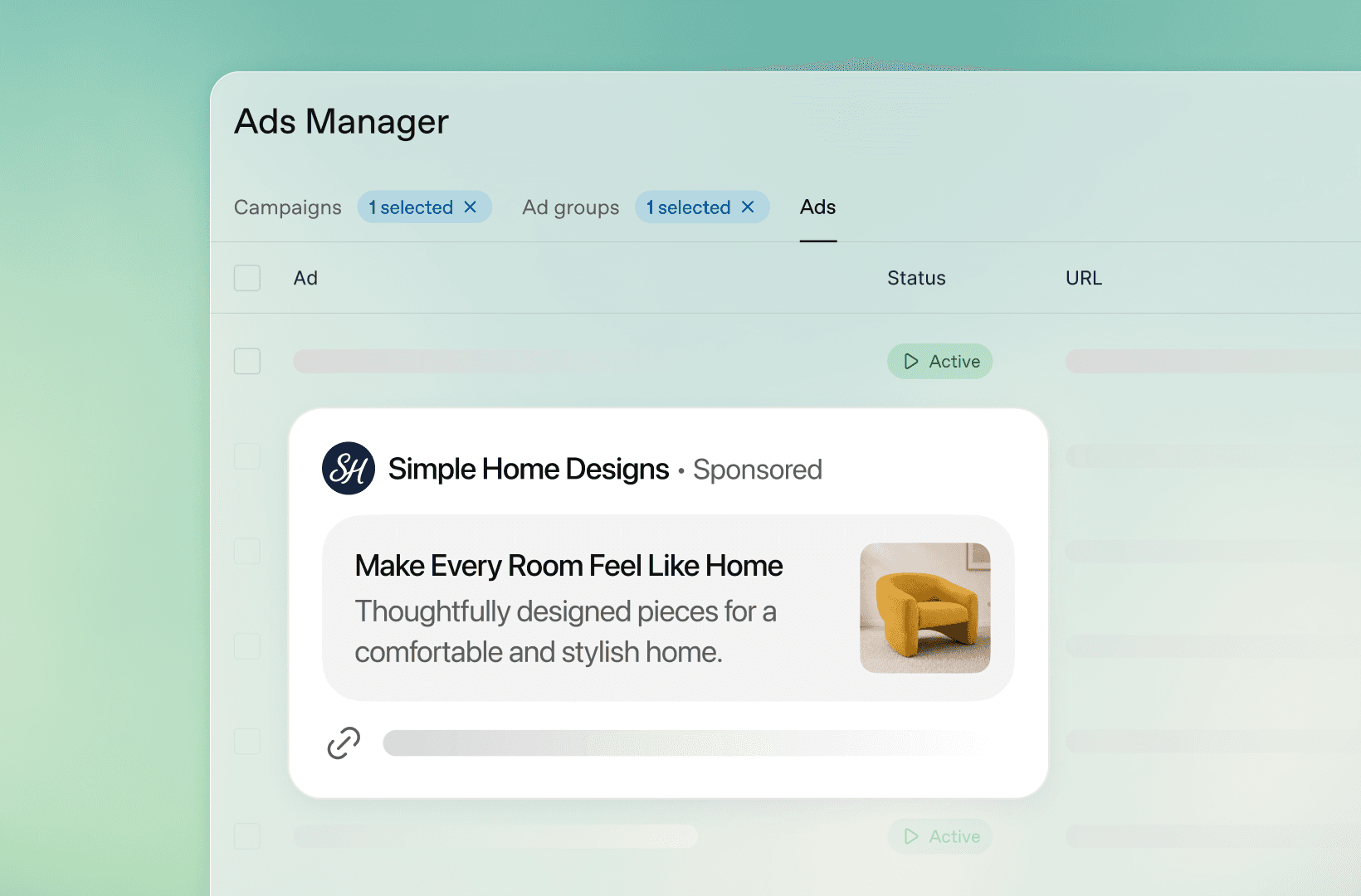
The placement is not interleaved with the AI's reply. OpenAI calls this the Answer Independence principle: the model generates its response independently, and the ad serving system activates only after the response is finalized. A pharmaceutical brand cannot pay to be recommended over a competitor inside the answer. A SaaS company cannot pay to have competitor names removed from a comparison. The answer is independent, the ad sits next to it.
Ads also do not appear in every conversation. OpenAI's matching system looks at the current thread's topic and intent, the ad's title, copy, landing page, and advertiser-provided context hints. If nothing matches well, no ad runs. For longer conversations, the system weighs overall context and user experience before showing anything.
Who sees ChatGPT Ads, and who doesn't
ChatGPT Ads appear only to logged-in adult users on the Free and Go ($8/month) tiers. Plus, Pro, Business, Enterprise, and Edu accounts have no ads. Users under 18, or accounts OpenAI predicts to be under 18, are excluded. Temporary chats and conversations involving sensitive contexts (mental health, regulated medical, politically charged topics) are also excluded from ad placement.
Geographically, the test launched in the U.S. on February 9, 2026 and expanded in March 2026 to Canada, Australia, and New Zealand. Further markets are planned across the rest of 2026.
The scale is the part marketers most often underestimate. Sam Altman confirmed ChatGPT had reached 800 million weekly active users in October 2025, with the Free tier accounting for the majority of that base. The ad inventory rides on top of that audience.
How ChatGPT Ads are bought in 2026
The buying model has changed three times in three months. Here is the current state.
Bidding options
ChatGPT Ads support two buying objectives:
Reach (CPM): Pay per 1,000 impressions. Default max bid is $60 CPM, though Digiday's verified reporting shows some auctions clearing as low as $25 in April and May 2026 as supply has scaled.
Clicks (CPC): Pay per click. OpenAI's recommended starting max bid is $3 to $5 per click. CPC opened to pilot advertisers on April 21, 2026, and is now available inside the self-serve Ads Manager.
A cost-per-action (CPA) bidding option is on OpenAI's near-term roadmap but is not yet live, according to remarks from OpenAI's ads and monetization lead at a May 2026 press briefing.
The auction
OpenAI runs a relevance-weighted, second-price auction. Bid alone does not determine placement: the matching system weighs conversation context, intent fit, landing page relevance, and ad copy quality against each eligible advertiser. Advertisers can submit context hints at the ad-group level, but these are interpretive guides, not exact-match keywords.
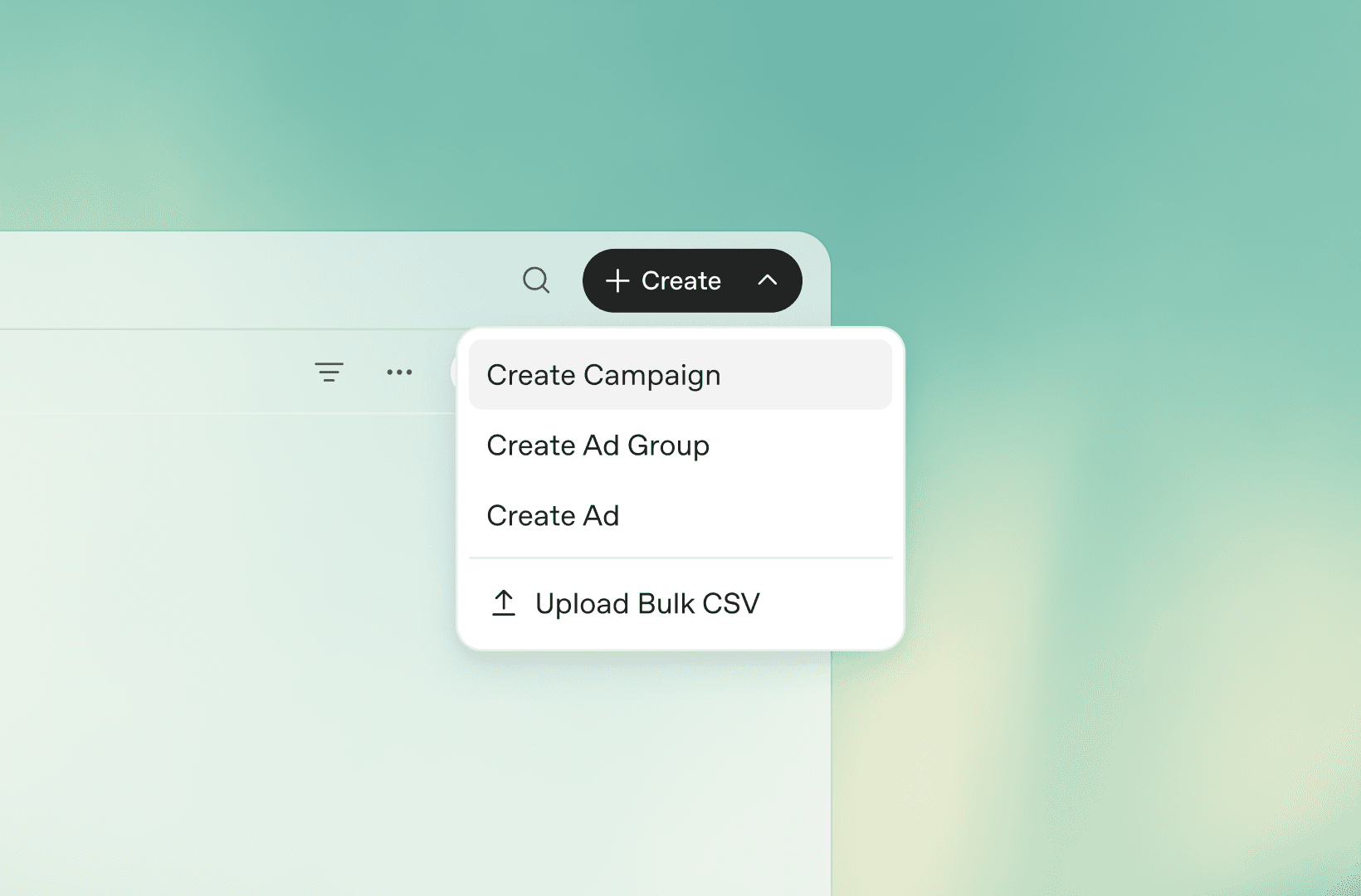
Self-serve Ads Manager
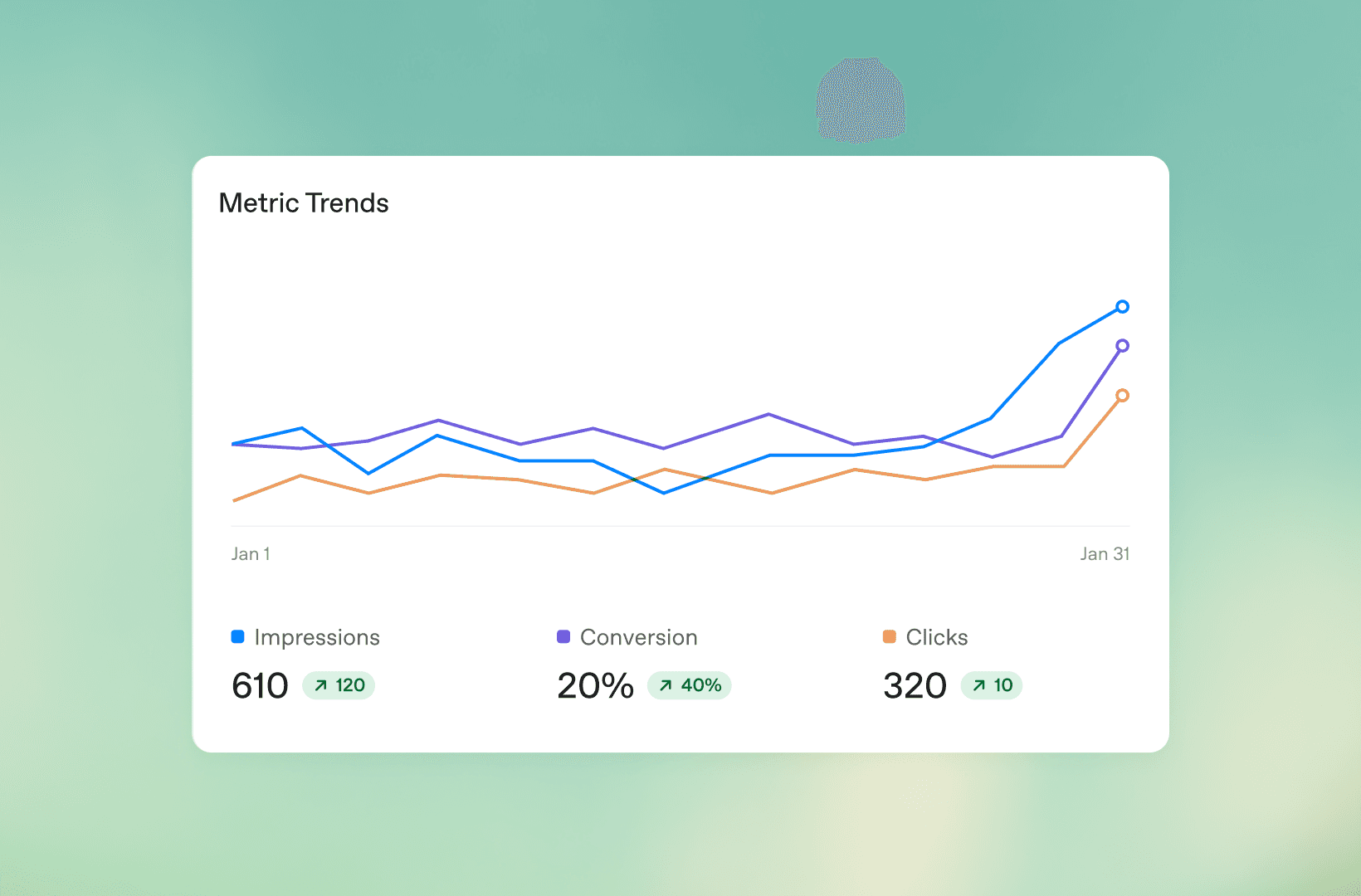
OpenAI opened a beta self-serve Ads Manager to U.S. advertisers in early May 2026. Inside the manager, advertisers register an account, add payment information, set budgets and bids, upload creative, and view performance metrics. The standard reporting set includes impressions, clicks, spend, CTR, average CPC, average CPM, and conversions. Tracking parameters such as UTMs persist on click and flow into existing analytics tools.
Product feed ads for retailers
A product feed integration launched in May 2026 lets ecommerce brands connect an existing catalog and have ChatGPT generate ad units automatically from product names, images, and attributes, instead of building campaigns item by item. The integration mirrors the feed-based campaign setup retailers already use on Google Shopping and Meta Advantage+ Shopping.
What just changed (and what most articles still get wrong)
If you have read other ChatGPT Ads guides published before May 2026, here is what is no longer accurate:
Minimum spend is no longer $250,000 (or $50,000). OpenAI dropped the minimum spend requirement entirely on May 5, 2026 when the Ads Manager opened to all U.S. advertisers. Small and mid-sized businesses can now test the channel without a six-figure commitment.
CPM is no longer the only buying model. CPC bidding is now live, and CPA is on the way.
Access is no longer invite-only. The self-serve Ads Manager is open to U.S. advertisers of any size, with platform partners (Adobe, Criteo, Kargo, Pacvue, StackAdapt) handling campaign budgeting, bidding, and creative for advertisers who want managed support.
Reporting is no longer impressions-and-clicks only. OpenAI added a Conversions API and pixel-based attribution alongside the May 2026 manager rollout, though the company retains ownership of the pixel itself.
The principles that have not changed: Answer Independence, conversation privacy, eligible category restrictions (no dating, alcohol, tobacco, healthcare, financial services, gambling, or political content at this stage), and the Free/Go-tier-only audience.
How ChatGPT Ads fit alongside organic AI search visibility
This is the part most coverage misses, and it matters more than the buying mechanics. ChatGPT Ads are a paid layer placed below the AI's answer, not inside it. The sponsored cards do not influence which sources ChatGPT cites in its organic response, which means earned visibility through SEO, GEO, and AEO continues to determine whether your brand gets mentioned inside the answer itself.
Two strategic implications fall out of that.
First, organic and paid share infrastructure. The clean product feeds, structured data, accurate entity information, and citation-worthy content that drive a strong ChatGPT Ads campaign also feed the organic retrieval signals that earn citation in AI Overviews, ChatGPT's reasoning surfaces, Perplexity, and Gemini. Brands that already invest in generative engine optimization have most of the foundation a paid campaign needs.
Second, paid is an accelerant, not a substitute. A brand that has earned no organic visibility but spends heavily on ChatGPT Ads gets surface-level exposure beneath the answer, but the answer itself still recommends competitors. A brand with strong organic citations that adds paid placement gets compound visibility: cited inside the answer, and reinforced by a sponsored card below it. The budget split across SEO, GEO, AEO, and paid AI placements is no longer a thought experiment, and getting the sequencing right matters more than maximizing either layer in isolation.
The underlying SEO foundation still does the load-bearing work for both layers, since ranking in Google's top results remains the strongest single predictor of citation inside AI surfaces. Our breakdown of how AEO and GEO tracking tools compare for B2B SaaS teams covers the measurement work that should precede any paid test.
Who should test ChatGPT Ads right now
Now that the minimum spend is gone and CPC bidding is live, the channel is testable for advertisers it was closed to three months ago. A short framework:
The fit is strongest for conversational research categories: B2B software, travel and hospitality, consumer durables, education, and retail comparison shopping. The buyer is mid-funnel, weighing options, and the ad arrives during consideration rather than ahead of it.
The fit is weakest for low-margin impulse purchases (the $3–$5 CPC math breaks below a certain AOV), local SMBs without sub-country geographic targeting, and visual-first categories like fashion where Instagram and TikTok formats outperform text-led units. Healthcare, financial services, political content, and other regulated verticals are excluded from the platform entirely at this stage.
For brands evaluating the channel, the cleanest first step is not a campaign. Run a baseline audit of how your category currently appears across ChatGPT, Perplexity, Gemini, and Google AI Overviews, identify where the organic gaps are, and use that diagnostic to decide whether paid placement amplifies an existing strength or papers over a citation problem that needs to be fixed first.
Show up where the decision happens
ChatGPT Ads are the first time a meaningful share of consumer attention inside an AI assistant has had a commercial layer attached to it. The mechanics will keep shifting through 2026, and the brands that win the next two years will treat AI surfaces as a discovery channel that earns both organic citation and paid amplification, not as a feature to bolt on after the org chart catches up.
If your team has been waiting for AI search to settle before investing, enough has settled to act on. Start with a current-state audit that maps where you stand across Google and AI surfaces, then a focused plan that addresses citation gaps before paid budget enters the picture. Look at how Passionfruit's GEO services approach the audit, see the citation tracking inside Passionfruit Labs, and talk to the team when the budget conversation gets real.
Frequently asked questions
The questions below come up most often when marketing teams, founders, and agencies size up ChatGPT Ads against existing paid channels.
When did ChatGPT Ads launch?
OpenAI began testing ChatGPT Ads in the United States on February 9, 2026. The pilot expanded to Canada, Australia, and New Zealand in March 2026. The self-serve Ads Manager opened to U.S. advertisers of any size on May 5, 2026. Further global expansion is planned across the rest of 2026.
How much do ChatGPT Ads cost?
ChatGPT Ads support both CPM and CPC buying. Default max CPM bid is $60, though Digiday reported some auctions clearing as low as $25 in April and May 2026. Recommended starting CPC bid is $3 to $5 per click. The minimum spend requirement, originally $250,000, dropped to $50,000 in April 2026 and was eliminated entirely on May 5, 2026.
Can anyone advertise on ChatGPT now?
U.S. advertisers of any size can now register through the self-serve Ads Manager, subject to category eligibility. Allowed verticals include household and consumer goods, local services, travel and experiences, and digital products and education. Excluded verticals include dating, alcohol, tobacco, healthcare, financial and legal services, gambling, and political content.
Do ChatGPT Ads influence the AI's answers?
No. OpenAI's Answer Independence principle keeps the chat model and the ad system fully separate. The AI generates its response based on training and reasoning, and the ad serving system activates only after the response is finalized. Advertisers cannot pay to alter, rank, or place themselves inside the answer itself.
Can advertisers see my ChatGPT conversations?
No. OpenAI does not share chats, chat history, memories, or personal details with advertisers. Advertisers receive only aggregated, non-identifying performance data such as impressions, clicks, CTR, spend, and conversions. Personalization signals stay within OpenAI's systems.
How are ChatGPT Ads different from Google Ads?
Google Ads run on keyword and audience targeting against search queries and pages. ChatGPT Ads use conversational context matching: the topic and intent of a live chat thread determines ad eligibility. There are no exact-match keywords, no SERP ranking positions, and the placement is a single sponsored unit below the AI's response rather than a results page of competing listings.
Do ChatGPT Ads replace SEO and GEO?
No. ChatGPT Ads are a paid layer on top of conversational AI surfaces. The sponsored cards do not influence which sources ChatGPT cites in its organic responses, which means earned visibility through SEO, GEO, and AEO remains the primary path to being mentioned, recommended, or cited inside the AI's answer itself.