AI
Join 500+ brands growing with Passionfruit!
Something fundamental just shifted in how people discover and buy products online. On January 11, 2026, Google announced the Universal Commerce Protocol (UCP), an open standard that lets shoppers complete purchases directly inside AI conversations without ever leaving Google Search or Gemini. Shopify, Walmart, Target, Etsy, and Wayfair are already on board, along with payment providers like Visa, Mastercard, and American Express.
If you're running SEO or managing e-commerce growth, this isn't just another platform update to monitor. This is the moment when search visibility and commerce infrastructure finally converged, and it changes everything about how your products get discovered, evaluated, and purchased.
Here's what you need to know, what it means for your search strategy, and how to prepare for a world where AI agents don't just recommend products but complete transactions on behalf of shoppers.
What Is Agentic Commerce, and Why Does It Matter Now?
Agentic commerce refers to AI systems that can execute complete shopping journeys autonomously. Unlike chatbots that answer questions or voice assistants that set timers, agentic systems can understand complex buying intent, compare products across multiple attributes, check real-time inventory, apply discount codes, and process payments without requiring users to navigate between different interfaces.
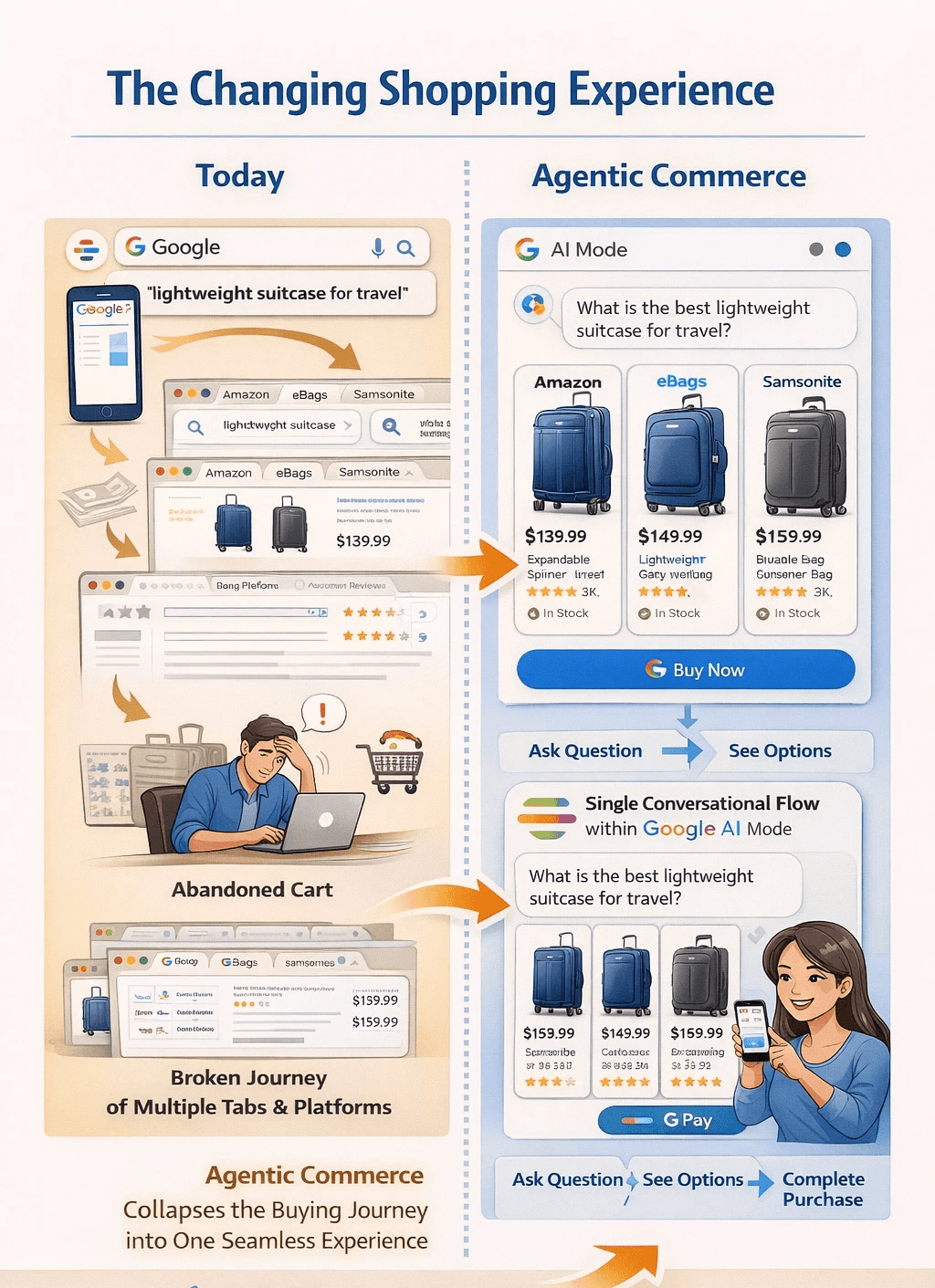
Think about how shoppers behave today. Someone researching a lightweight suitcase for an upcoming trip might start in Google Search, click through to three different retailer sites, compare prices in separate tabs, check reviews on another platform, then abandon the whole process because checkout felt like too much friction. That's a broken experience built on decades of siloed systems that never learned to talk to each other.
Agentic commerce collapses that entire journey into a single conversational flow. A shopper asks Google's AI Mode for a lightweight suitcase recommendation, sees options from multiple retailers with real pricing and availability, and completes the purchase right there using Google Pay, all within the same interface where the question was asked. No redirects, no new tabs, no abandoned carts.
Google's Universal Commerce Protocol is the technical infrastructure that makes this possible at scale. It's an open standard that defines how AI agents communicate with merchant systems to handle product discovery, checkout, payments, and post-purchase support. UCP works alongside other emerging protocols like OpenAI's Agentic Commerce Protocol (ACP) and Google's own Agent Payments Protocol (AP2), creating an ecosystem where different AI platforms can facilitate transactions using a common language.
How UCP Actually Works: The Technical Architecture
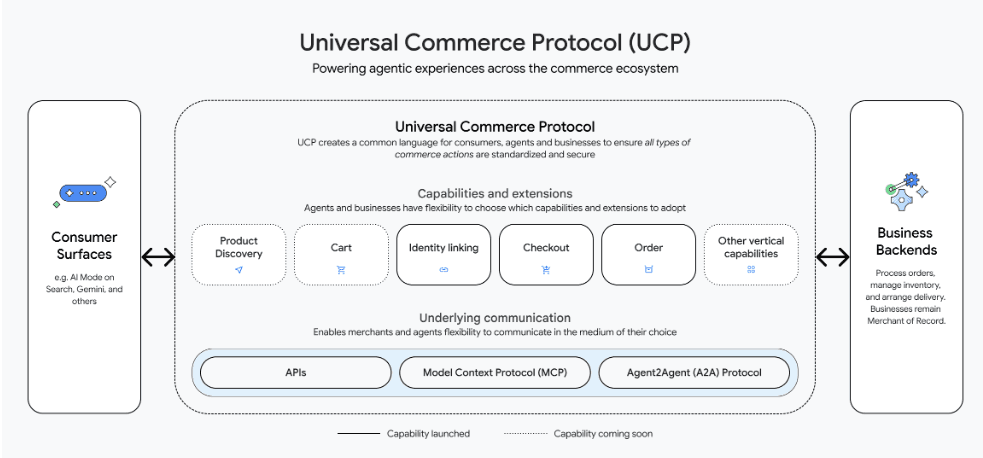
Image credits: Google
The protocol establishes a standardized way for AI surfaces like Google Search and Gemini to connect with merchant backends. Instead of building custom integrations for every platform, merchants implement UCP once and gain access to any surface that supports the standard.
When a shopper engages with an AI agent, the system discovers available merchant capabilities through a standardized manifest file located at a well-known URL endpoint. This manifest tells the agent which commerce functions the merchant supports, such as checkout, product discovery, discount application, order tracking, and returns management. Each capability can have extensions that add specialized functionality like loyalty program integration or subscription billing options.
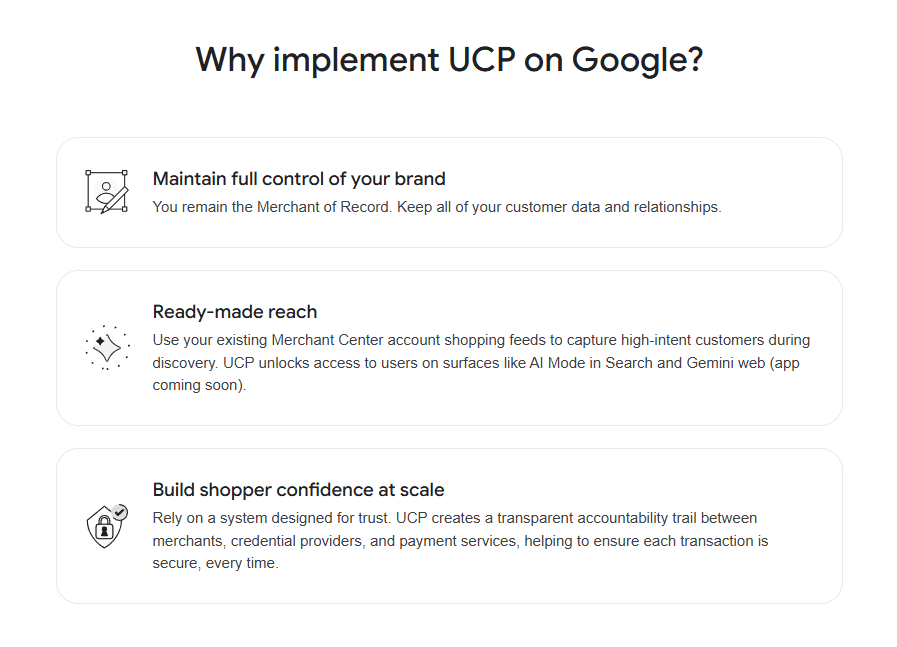
Image credits: Google
UCP separates payment instruments (what consumers use to pay) from payment handlers (who processes the transaction), which allows the system to work with existing payment providers rather than forcing merchants onto a single payment rail. Merchants remain the seller of record, maintain control over customer data, and handle settlement, refunds, and compliance exactly as they do in traditional e-commerce.
Google's initial implementation focuses on checkout within AI Mode in Google Search and the Gemini app for eligible U.S. retailers. Shoppers can complete purchases using Google Pay, with PayPal support planned. Merchants integrate through their existing Google Merchant Center accounts, using product feeds they're already maintaining for Google Shopping.
The protocol supports two integration paths. The default native checkout embeds the transaction logic directly into the AI conversation, which unlocks the full agentic potential as new capabilities roll out. For merchants with highly customized branding requirements or complex checkout flows, UCP also supports an embedded checkout option using iframes, though this path requires specific approval.
What This Means for SEO and Generative Engine Optimization
For the past two decades, SEO strategy centered on getting pages to rank and driving traffic to your site. The goal was visibility in search results, and success was measured in rankings, clicks, and sessions. But when transactions happen inside AI conversations, that entire model breaks.
Your product pages might never get clicked. Your beautifully optimized category pages might never get visited. Traffic as a metric becomes less meaningful when high-intent shoppers complete purchases without ever leaving the search interface. This doesn't mean traditional SEO is dead, but it does mean we're entering an era where visibility and conversion are becoming the same event.
This is where Generative Engine Optimization (GEO) becomes critical. GEO refers to the practice of making your products and brand discoverable within AI-generated responses across platforms like ChatGPT, Perplexity, Google's AI Mode, and now commerce-enabled agents. Where traditional SEO optimized for algorithms that ranked web pages, GEO optimizes for language models that synthesize answers, make recommendations, and now facilitate transactions.
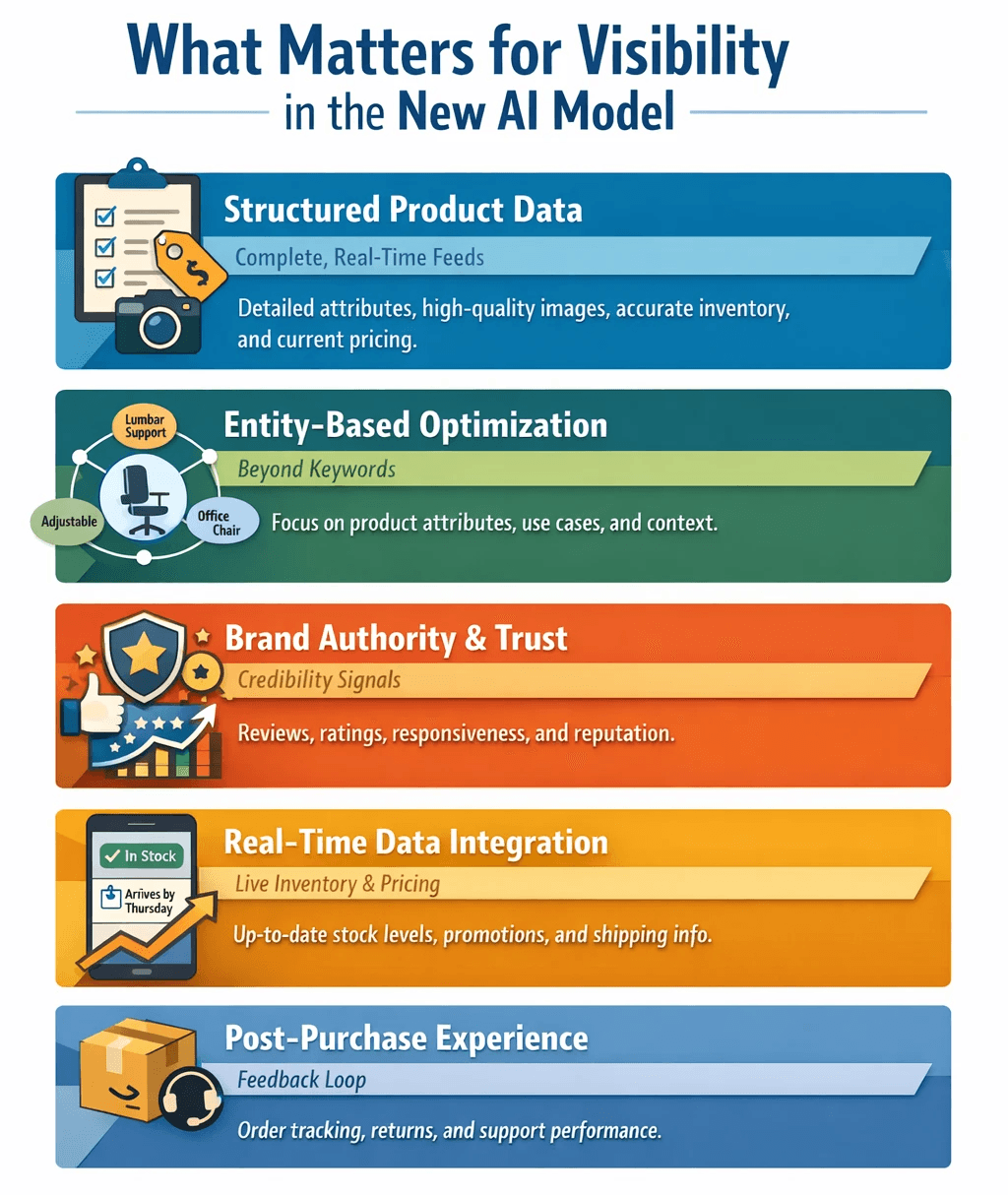
The key difference is citation and attribution. In traditional search, Google showed ten blue links and let users decide which to click. In generative search, the AI synthesizes information from multiple sources and presents a single coherent answer. For commerce, this means the AI agent selects which products to surface based on the user's stated intent, product attributes, availability, pricing, and merchant reputation.
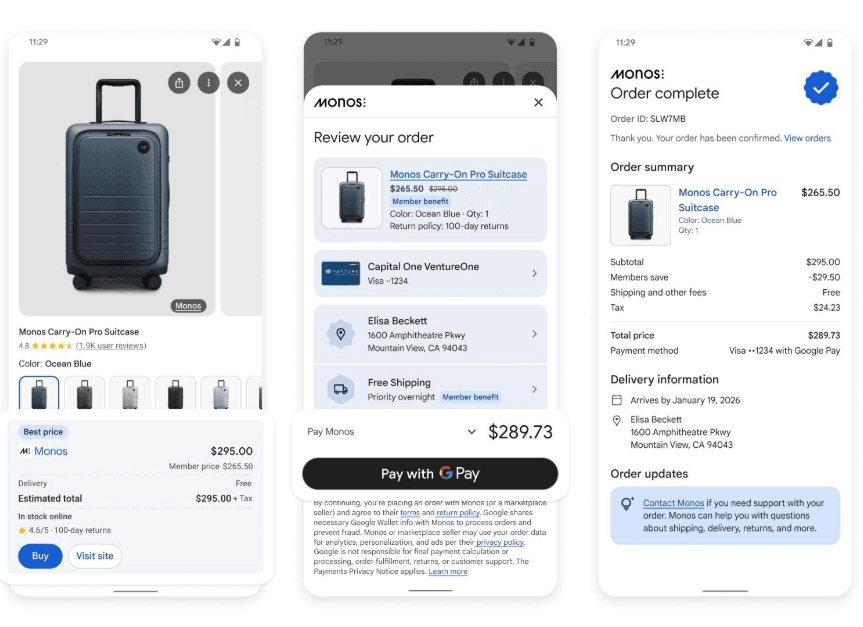
Image credits: Google
How UCP Actually Works: 7 Technical Components That Power Agentic Commerce
Understanding the Universal Commerce Protocol doesn't require a computer science degree, but it does require clarity on how the pieces fit together. Here's exactly how UCP connects AI agents to merchant systems and enables seamless transactions without breaking the conversational flow.
1. One Integration, Unlimited Surfaces
The old way: Merchants built custom integrations for every platform where they wanted to sell. Want to sell on Google Shopping? Build an integration. Want to add ChatGPT commerce? Build another integration. Want to support Gemini? Start from scratch again.
The UCP way: Merchants implement the Universal Commerce Protocol once and immediately gain access to any AI surface that supports the standard. Google Search AI Mode, Gemini, and future platforms all speak the same language, which means you build the connection once and deploy everywhere.
Why it matters: This eliminates the N x N integration problem that has plagued e-commerce for decades. Instead of maintaining separate connections to dozens of platforms, you maintain one standardized implementation that scales across the entire ecosystem.
2. Capability Discovery Through Standardized Manifests
How it works: When a shopper engages with an AI agent, the system automatically discovers what commerce functions your business supports by reading a manifest file located at a predictable URL endpoint (specifically at /.well-known/ucp).
What the manifest contains:
Supported commerce capabilities (checkout, product discovery, order tracking, returns)
Available extensions (loyalty programs, subscription billing, discount codes)
Payment handler configurations
Service endpoints and API specifications
The shopper experience: This happens invisibly in milliseconds. A user asks Google's AI Mode for a product recommendation, and the agent instantly knows which merchants can complete the full transaction, which ones only support browsing, and which special features each merchant offers.
Why it matters: Dynamic capability discovery means merchants can add new features without requiring platform updates. When you enable subscription billing or loyalty point redemption, AI agents automatically detect and utilize those capabilities in recommendations.
3. Modular Capabilities With Extensible Architecture
Core commerce building blocks: UCP defines standard capabilities that represent fundamental commerce functions:
Checkout: Complete transaction processing from cart to confirmation
Product Discovery: Search, browse, and recommendation functionality
Discount Application: Promotional codes, member pricing, dynamic offers
Order Tracking: Real-time shipment status and delivery updates
Returns Management: Initiate returns, print labels, process refunds
Extensions add specialized functionality: Each core capability can have extensions that augment it with business-specific features. For example, the Checkout capability might include extensions for:
Loyalty point redemption
Subscription cadence selection (monthly, quarterly, annual)
Gift messaging and packaging
Delivery date and time selection
Buy now, pay later options
Why it matters: This modular design means UCP can scale across industries and use cases. A furniture retailer needs delivery scheduling. A SaaS company needs subscription management. A florist needs specific delivery dates. The same protocol handles all of these scenarios through different capability extensions.
4. Separation of Payment Instruments and Payment Handlers
The architectural choice: UCP separates what consumers use to pay (instruments) from who processes the transaction (handlers). This distinction is critical for ecosystem flexibility.
Payment instruments are what consumers select:
Credit or debit cards
Digital wallets (Google Pay, Apple Pay, PayPal)
Bank transfers
Buy now, pay later services
Cryptocurrency (potentially)
Payment handlers are the processors that execute transactions:
Stripe
Shopify Payments
Adyen
Square
Your existing payment processor
Why it matters: This separation allows UCP to work with existing payment infrastructure rather than forcing merchants onto a single payment rail. You keep your current payment processor, your existing rates, and your established compliance frameworks. The protocol simply standardizes how payment information flows through the system.
5. Merchant Control and Data Ownership
Critical principle: Merchants remain the seller of record in all UCP transactions.
What this means in practice:
You own the customer relationship and transaction data
You control pricing, inventory, and fulfillment
You handle settlement, refunds, and disputes through your existing systems
You maintain compliance with your current regulatory framework
Customer data stays in your systems, not platform intermediaries
The role of AI platforms: Google, ChatGPT, or other AI surfaces act as discovery and transaction facilitation layers. They connect shoppers to merchants and enable the conversation, but the actual commerce relationship exists between your business and the customer.
Why it matters: This preserves the e-commerce business model merchants have built over decades. You're not becoming a marketplace vendor or losing control of customer data. You're adding a new channel that respects your existing infrastructure.
6. Two Integration Paths: Native vs. Embedded Checkout
Default option: Native Checkout: The transaction logic embeds directly into the AI conversation. The agent handles the entire checkout flow conversationally, asking for shipping addresses, payment selection, and order confirmation without ever leaving the chat interface.
Best for: Most merchants, especially those selling straightforward products where the checkout process doesn't require complex customization. This approach unlocks the full agentic potential as new capabilities roll out.
Alternative option: Embedded Checkout: For merchants with highly customized branding requirements or complex checkout flows that require visual interfaces, UCP supports an embedded checkout option using iframes. This displays your branded checkout experience within the AI interface.
Best for: Luxury brands requiring specific visual presentation, merchants with complex product configurators, or businesses with checkout flows that don't translate well to conversational interfaces.
The tradeoff: Embedded checkout maintains your visual branding and complex flow logic, but requires specific platform approval and may not support all future agentic features as seamlessly as native checkout.
7. Google Merchant Center as the Integration Gateway
Current implementation: Google's rollout of UCP focuses on merchants with active Google Merchant Center accounts and product feeds eligible for Google Shopping.
What you need:
Active Google Merchant Center account
Product feed meeting Google Shopping requirements
Products approved for checkout on Google surfaces
UCP implementation on your backend systems
What you get:
Direct selling capability in AI Mode in Google Search
Transaction support in Gemini app (rolling out)
Google Pay integration for frictionless checkout
PayPal support (planned)
Future access to additional Google AI surfaces as they launch
Why this matters: Most e-commerce merchants already maintain Google Shopping feeds. UCP leverages this existing infrastructure rather than requiring entirely new data pipelines. You're building on work you've already done, not starting from scratch.
The Revenue Measurement Challenge
The shift to agentic commerce creates a fundamental problem for how we measure SEO performance. If purchases happen inside AI conversations, how do you attribute revenue to your content strategy, your product optimization work, or your investment in brand authority?
Traditional analytics break down because there's no pageview to track, no session to measure, no last-click to attribute. When a shopper asks Google's AI Mode for running shoe recommendations and completes a purchase without ever visiting your website, Google Analytics sees nothing. Your conversion tracking pixel never fires. Your attribution model has no data to work with.
This is where revenue-per-keyword tracking becomes essential, not just helpful. Instead of measuring SEO success by organic traffic volume or ranking positions, you need to connect specific search queries to actual transaction revenue. This requires integration between your product feed, your merchant systems, and reporting infrastructure that can map AI-initiated purchases back to the queries and recommendations that drove them.
Merchants implementing UCP will receive transaction data from Google, including information about what triggered the purchase. But translating that into actionable optimization insights requires infrastructure most companies don't have yet. You need to know which product attributes drive recommendations, which content helps AI systems understand your product's use cases, which pricing strategies perform better in agentic contexts, and how your brand's trust signals compare to competitors in the same category.
How Passionfruit Bridges Traditional SEO and Agentic Commerce
This is exactly the problem Passionfruit was built to solve. While traditional SEO agencies optimize for rankings and traffic, and most commerce platforms focus on conversion rate optimization, neither approach addresses the fundamental shift happening right now.
Passionfruit operates at the intersection of search visibility and revenue outcomes, which means we're positioned to help brands navigate the transition from traffic-based SEO to transaction-based optimization. Our AI-powered growth engine combines technical SEO excellence with AI-native content strategy and real-time performance measurement, all focused on a single goal: turning search visibility into measurable revenue growth.
For clients preparing for agentic commerce, we're building visibility strategies that work across both traditional search and AI platforms. This means optimizing product feeds for maximum discoverability in language model recommendations, creating content that helps AI systems understand your products' unique value propositions and use cases, building citation-worthy brand authority that makes AI agents confident in recommending your products, implementing structured data that gives AI platforms the real-time information they need to facilitate transactions, and measuring performance using revenue attribution models that work when traffic disappears.
We track revenue per keyword, not just positions. We measure visibility lift across AI search platforms like ChatGPT, Perplexity, Google AI Mode, and traditional search engines. We connect content optimization decisions directly to business outcomes you can see in your P&L, not just your analytics dashboard.
The brands that will win in agentic commerce are the ones who recognize this isn't just a new marketing channel to add to the mix. It's a fundamental restructuring of how product discovery, evaluation, and purchase happen online. The technical infrastructure is here. The consumer behavior is shifting. The only question is whether your search strategy is ready to capture revenue in this new environment, or whether you're still optimizing for a model that's rapidly becoming obsolete.
What Merchants Should Do Right Now
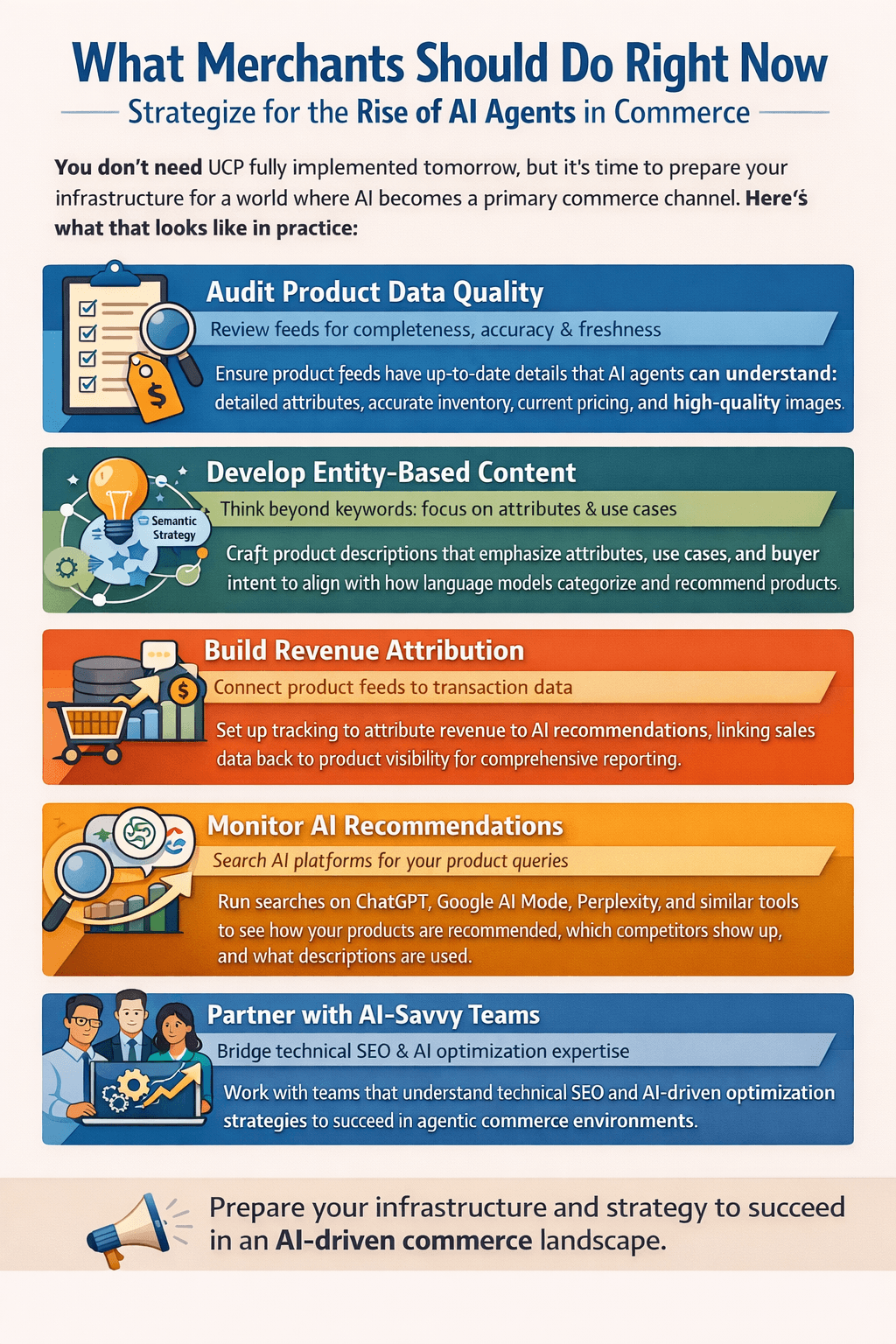
You don't need to have UCP fully implemented tomorrow, but you do need to start preparing your infrastructure and strategy for a world where AI agents become a primary commerce channel. Here's what that looks like in practice:
Audit your product data quality with the same rigor you'd apply to a site migration. Incomplete attributes, outdated pricing, and missing images will keep your products out of AI recommendations just as surely as technical SEO errors keep pages out of Google's index. If your product feeds aren't clean enough for AI agents to understand what you sell and who should buy it, you're invisible in this channel.
Develop an entity-based content strategy that maps to how language models categorize and recommend products. Stop thinking about keyword density and start thinking about semantic relationships, product attributes, use cases, and buyer intent signals. Create content that helps AI systems answer "why should I recommend this product for this specific person's needs?" not just "does this page target the right keywords?"
Build measurement infrastructure that can attribute revenue to search visibility, even when traffic data becomes less reliable. This means connecting your product feed to your transaction database, implementing tracking that captures AI-initiated purchases, and creating reporting dashboards that show revenue outcomes, not just engagement metrics.
Monitor how AI platforms are representing your products in their recommendations. Search for queries your target customers would use in ChatGPT, Perplexity, Google AI Mode, and other generative platforms. See which products surface, how they're described, which competitors appear alongside you, and what factors seem to influence recommendations. This competitive intelligence will become as important as traditional SERP analysis.
Partner with teams and platforms that understand both the technical SEO foundations and the AI-native optimization strategies required to succeed across both environments. The skills needed to optimize for agentic commerce aren't the same as traditional SEO, and they're not the same as general AI implementation. You need expertise that bridges search visibility, language model behavior, commerce infrastructure, and revenue measurement.
The Window Is Open, But It Won't Stay Open Forever
Google's announcement of UCP, Shopify's immediate adoption, and the endorsement from major retailers signals that agentic commerce isn't an experiment anymore. It's the next platform shift, and it's happening right now. The merchants who establish strong presence in AI recommendations early will build brand authority and customer trust that becomes harder to displace over time.
Just as the early winners in traditional SEO built domain authority and link profiles that still provide competitive advantages today, the brands that become go-to recommendations in AI agents will build trust signals and performance data that compound over time. The feedback loop between recommendation frequency, transaction volume, positive customer experiences, and enhanced AI visibility creates a flywheel that accelerates for early movers and makes catch-up harder for late adopters.
We're in the early days of a fundamental shift in how commerce happens online. The brands that recognize this moment and invest in the right capabilities now won't just survive the transition. They'll define what success looks like on the other side.
The Future of Search Is Transactional
The announcement of Google's Universal Commerce Protocol marks the moment when search visibility and commerce infrastructure fully merged. For more than two decades, SEO strategy separated discovery from transaction. You optimized to get found, then handed users off to a separate conversion funnel. That model is ending.
In the agentic commerce era, discovery, evaluation, and purchase collapse into a single conversational flow. The AI systems that recommend your products are the same systems that process transactions. Visibility and conversion happen simultaneously, which means your search strategy and commerce infrastructure can no longer operate independently.
This isn't a distant future scenario. Google's implementation is rolling out now. Shopify, Walmart, Target, and major payment processors have already committed. The merchants building strong presence in AI recommendations today are establishing competitive advantages that will compound as consumer behavior shifts toward conversational commerce.
The question isn't whether agentic commerce will become a primary channel. The question is whether your business will be ready when it does.
At Passionfruit, we help brands navigate this transition by connecting traditional SEO excellence with AI-native optimization strategies, all measured by the metric that actually matters: revenue growth. Our revenue-focused approach tracks performance across both conventional search engines and generative platforms, giving you a complete picture of how search visibility translates to business outcomes.
If you're ready to build a search strategy that works in the agentic commerce era, let's talk. The brands that move now won't just survive the platform shift. They'll define what success looks like on the other side.
FAQs
What's the difference between traditional SEO and optimizing for agentic commerce?
Traditional SEO focuses on ranking web pages in search results and driving traffic to your site. Agentic commerce optimization focuses on making your products discoverable and purchasable within AI conversations, where transactions happen without users ever visiting your website. The goal shifts from traffic generation to direct revenue attribution through AI recommendations.
Do I need to choose between Google's UCP and OpenAI's ACP?
No. These protocols serve different purposes and can coexist. UCP powers commerce within Google's ecosystem (AI Mode in Search, Gemini), while ACP enables shopping across multiple AI assistants. Most merchants will eventually support both, as each unlocks access to different customer touchpoints. The priority is building flexible infrastructure that can adapt as new protocols emerge.
Will agentic commerce replace my e-commerce website?
Not entirely. Your website still serves important functions like brand storytelling, detailed product education, and complex configurators that don't fit conversational interfaces. However, a growing portion of straightforward purchase transactions will shift to AI-mediated experiences. Think of it as a new channel that complements your existing commerce infrastructure, not a complete replacement.
How do I measure ROI when purchases happen inside AI conversations?
You'll need to shift from traffic-based metrics to revenue attribution models that track which search queries, product attributes, and brand signals drive AI recommendations and completed transactions. This requires connecting your product feed data to transaction records and implementing tracking that captures purchases initiated through AI agents, even when users never visit your site.
What happens to my existing SEO strategy and rankings?
Traditional search rankings remain important for branded queries, informational content, and complex research journeys where users want to evaluate multiple sources. But for high-intent commercial queries where users have clear buying intent, AI agents will increasingly handle the entire journey. Your SEO strategy needs to expand to cover both traditional search visibility and AI recommendation optimization.
How quickly do I need to implement UCP?
The timeline depends on your product category and customer behavior. If you sell products with straightforward purchase decisions (consumer goods, replacement items, gift purchases), moving quickly matters because early adopters will build trust signals and recommendation frequency that compounds over time. For complex B2B purchases or highly customized products, you have more time to evaluate how agentic commerce fits your customer journey.
What product data do AI agents need to recommend my products?
AI systems require comprehensive structured data including detailed product attributes, real-time inventory availability, current pricing with active promotions, high-quality images, shipping estimates based on location, clear return policies, and customer review data. The more complete and accurate your product feed, the more confident AI agents will be in recommending your products.
Can small businesses compete in agentic commerce, or is this only for large retailers?
Agentic commerce actually creates opportunities for smaller merchants with unique products or specialized expertise. AI agents evaluate products based on fit for user needs, not just brand size. A small business with excellent product data, strong customer reviews, and unique offerings can surface in recommendations alongside major retailers. The key is data quality and clear differentiation, not marketing budget size.