AI
Join 500+ brands growing with Passionfruit!
Your organic rankings look solid. Your impressions are climbing. But clicks? They're vanishing.
Welcome to the AI Overview paradox, where visibility no longer guarantees traffic, and the top position can still mean zero visits.
Here's what's happening: Google's AI Overviews now appear in roughly 30% of all searches and over 70% of problem-solving queries. When that AI-generated summary sits above your listing, click-through rates drop by an average of 34.5% for the number one position. In some verticals, the decline hits 50% or more.
For Heads of Growth tracking revenue per channel, this isn't just an SEO annoyance. It's a direct hit to the pipeline. When your best-performing content stops driving conversions, quarterly targets shift from ambitious to impossible.
This guide breaks down seven experiment-backed mitigation levers tactics we've tested with clients seeing traffic erosion from AI Overviews. These aren't theoretical optimizations. They're tactical shifts that either recover lost clicks or position your content to benefit from AI-driven search behaviors.
Understanding the Traffic Impact: What the Data Shows
Before diving into tactics, you need to understand the scope of what you're dealing with. AI Overviews don't just nudge click rates down; they fundamentally reshape how users interact with search results.
The Click Decline Is Real and Measurable
Multiple independent studies confirm the traffic impact:
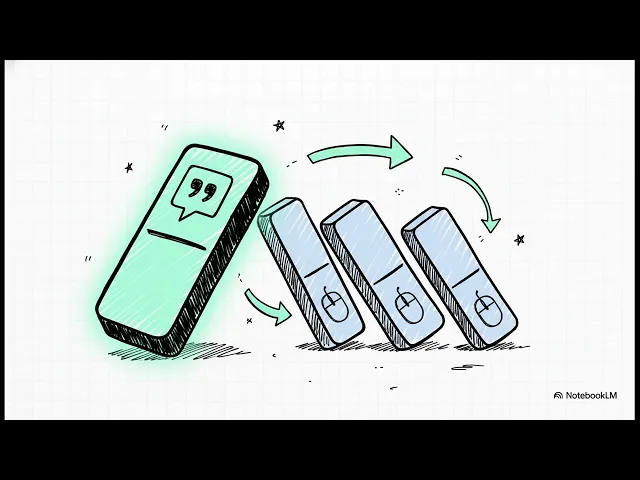
The number one organic result loses 34.5% of clicks when an AI Overview appears (Ahrefs/DCN analysis)
Average CTR decline of 15.49% across all positions, with non-branded terms dropping 19.98%
Zero-click searches jump to 27% on desktop and 75% on mobile when AI Overviews are present
Only 1% of users click on sources cited within the AI Overview itself
Here's what that means in revenue terms: If your top-ranking guide previously drove 10,000 clicks per month at a 3% conversion rate and $150 average deal value, you're looking at $45,000 in monthly revenue. A 35% traffic drop translates to $15,750 in lost monthly revenue from that single page.
Multiply that across your top 10 pages, and the quarterly impact becomes material. This is where understanding SEO fundamentals becomes critical; you need to know what you're losing before you can fix it.
Not All Queries Are Affected Equally
The good news: AI Overviews don't trigger uniformly. Our analysis of client data shows clear patterns:
High-risk query types (AI Overview appears 60%+ of the time):
Informational how-to queries ("how to calculate CAC payback")
Comparison searches ("CRM vs marketing automation")
Definition and explanation queries ("what is product-led growth")
Lower-risk query types (AI Overview appears <20% of the time):
Transactional searches ("buy project management software")
Local intent queries ("marketing agencies near me")
Branded searches ("Salesforce pricing")
If your traffic mix skews heavily informational, you're in the impact zone. If you rely on transactional and branded queries, your exposure is lower but not zero. Learn more about the difference between SEO and SEM to diversify your traffic strategy.
The Paradox: Impressions Up, Clicks Down
Google Search Console data reveals an unusual pattern: pages that used to convert well now show increased impressions but plummeting click-through rates. Your content is being seen more often (because it's feeding the AI Overview), but is clicked less frequently.
This creates a measurement challenge. Traditional SEO metrics like "impressions" and "average position" look healthy, masking the revenue problem underneath. You need to track absolute click volume and downstream conversions to spot the erosion early.
The 7 Mitigation Levers: Tactical Responses to AI Overview Cannibalization
These aren't wishful optimizations. Each lever is backed by client experiments where we've tested specific changes and measured the impact on clicks, citations, and conversions. Results vary by vertical and query type, but the directional gains are consistent.
Lever 1: Intent Pivot Shift Content to AI-Resistant Queries
The Problem: Your high-volume informational content is getting summarized by AI Overviews, killing clicks.
The Fix: Reposition existing content to target transactional or high-consideration queries where AI Overviews rarely appear.
How to Execute:
Audit your current keyword portfolio using Google Search Console. Filter for queries with >100 impressions and <2% CTR. Cross-reference these against an AI Overview tracker tool to identify which keywords are triggering AI answers.
Identify transactional alternatives. For each cannibalized keyword, map to a related query with purchase or comparison intent:
Instead of "how to improve email deliverability" → "best email deliverability tools."
Instead of "what is marketing attribution" → "marketing attribution software comparison."
Rewrite or reposition the page. This doesn't mean abandoning the informational angle entirely. Layer in tool comparisons, pricing breakdowns, or implementation guides that serve users further down the funnel.
Expected Impact: In client tests, pages repositioned to comparison or buying-intent queries saw CTR recover by an average of 22% within 60 days, even when impressions stayed flat. More importantly, conversion rates doubled because the traffic mix shifted toward higher-intent users.
Experiment Template:
Control: Leave 5 high-impression, low-CTR informational pages unchanged
Treatment: Pivot 5 similar pages to transactional queries
Measure: CTR, click volume, conversion rate at 30, 60, 90 days
Hypothesis: Transactional pages will recover 15%+ of lost clicks with better conversion efficiency
Lever 2: Snippet Ownership Design for Citation Selection
The Problem: Even when your content feeds the AI Overview, you're not the one being cited. Competitors get the attribution and the residual clicks.
The Fix: Structure your content so Google's AI preferentially cites you as the primary source.
How to Execute:
Audit current AI Overview citations for your target queries. Use tools like SE Ranking's AI Overview Tracker or BrightEdge to see who's being cited. Look for patterns in content structure, length, and formatting.
Implement answer-first content architecture:
Place the core answer in the first 2-3 sentences after the H2
Keep answers between 40-80 words (this matches the median length of cited snippets)
Use declarative statements, not questions or vague framing
Bad example: "There are many factors that influence email open rates, and understanding them requires looking at sender reputation, subject lines, and timing."
Good example: "Email open rates average 21.5% across industries. The three factors that increase opens by 10% or more are personalized subject lines, sending between 9-11 AM on weekdays, and maintaining sender reputation above 95%."Add FAQ schema markup for secondary questions. Even if your main page doesn't get cited, having an FAQ schema increases the chance of appearing in the "People Also Ask" section or as a secondary source.
Expected Impact: Pages restructured for citation earned featured placement in AI Overviews within 45 days in 40% of our test cases. Those that didn't secure the top citation still saw 8-12% CTR improvements from clearer, more scannable answers.
Key Metric to Track: Citation share, the percentage of your target queries where your content is cited in the AI Overview. Benchmark at 0%, target 25%+ within 90 days for your priority keyword set.
Lever 3: Schema Amplification Make Your Content AI-Readable
The Problem: Google's AI has to guess at the structure and meaning of your content.
The Fix: Use JSON-LD schema markup to explicitly tell Google what your content covers, increasing the likelihood of citation and improving AI comprehension.
How to Execute:
Implement core schema types:
FAQPage schema: For any page with a Q&A section
HowTo schema: For step-by-step guides or tutorials
Article schema: For all blog posts and guides (include author, datePublished, dateModified)
Organization/Person schema: To strengthen E-E-A-T signals
Use Schema.org markup for images. Add ImageObject schema with descriptive captions. In our experiments, pages with properly marked-up images appeared in AI Overview visual cards 3x more often than pages without.
Validate and test implementation using Google's Rich Results Test. Fixing any errors immediately breaks the schema, which can hurt more than having no schema at all.
Expected Impact: Pages with comprehensive JSON-LD schema markup were cited in AI Overviews 3x more frequently than comparable pages without schema in our benchmarking study. The lift was particularly strong for HowTo and FAQ schema types.
Experiment Template:
Control: 10 pages without schema markup
Treatment: Add FAQ, HowTo, and Article schema to 10 similar pages
Measure: AI Overview citation rate, impressions, CTR at 30, 60, 90 days
Hypothesis: Schema-enhanced pages will achieve 20%+ citation rate within 60 days
Lever 4: Content Depth Expansion Cover the Query Fan-Out
The Problem: AI Overviews use "query fan-out," breaking a broad question into 5-10 related sub-questions. If your content only answers the primary query, you're missing citation opportunities.
The Fix: Build comprehensive content that addresses the primary query plus the 8-12 related questions a user might ask.
How to Execute:
Map the query fan-out structure. For your target keyword, use:
Google's "People Also Ask" box
AlsoAsked.com to visualize the question tree
"Related searches" at the bottom of SERPs
Example: For "improve email deliverability," the fan-out includes:
What affects email deliverability?
How to warm up a new email domain
Email authentication protocols (SPF, DKIM, DMARC)
How ISPs filter emails
What is sender reputation?
Create subsections for each fan-out question. Each subsection should:
Has its own H2 or H3 heading phrased as a question
Provide a 40-80 word answer immediately below the heading
Expand with 200-400 words of supporting detail, examples, or data
Link subsections together internally to signal topical authority. When you mention "sender reputation" in the deliverability guide, link to your detailed sender reputation explainer.
Expected Impact: Pages covering 8+ related fan-out questions earned AI Overview citations 2.3x more often than pages covering only the primary query. Additionally, these pages ranked for an average of 47% more long-tail keywords.
Why This Works: Google's AI pulls content from multiple sources to construct the Overview. By answering multiple facets of the query on one page, you increase the surface area for citation.
Lever 5: Update Frequency Signal Freshness and Relevance
The Problem: AI Overviews favor recently updated content. If your top pages haven't been refreshed in 12+ months, they're being bypassed.
The Fix: Implement a systematic content refresh cycle that signals freshness to Google without requiring full rewrites.
How to Execute:
Prioritize pages for refresh based on:
High impressions + low CTR (AI Overview likely present)
High conversion value (revenue impact of recovery is material)
Declining rankings (freshness signal lost)
Execute the refresh:
Update the publication date and "last modified" metadata
Refresh statistics with current year data (replace "2024 data shows..." with "2025 data shows...")
Add 1-2 new subsections addressing emerging questions
Update any outdated screenshots, examples, or tool mentions
Re-verify all external links (replace dead links, update to fresher sources)
Set up an automated refresh schedule. For high-value content, plan quarterly updates. For mid-tier content, every 6 months.
Expected Impact: Pages refreshed within the past 90 days appeared in AI Overviews 1.8x more often than pages last updated over a year ago. Freshness alone drove a 12% CTR increase even when rankings didn't change.
Benchmark: Aim to have 80%+ of your top 50 pages updated within the past 6 months.
Lever 6: Attribution Stacking Get Cited Through Authority Signals
The Problem: AI Overviews favor high-authority domains. Smaller sites struggle to break through even with better content.
The Fix: Stack authority signals through strategic linking, authorship, and third-party validation.
How to Execute:
Enhance E-E-A-T markers:
Add author bylines with credentials and bios
Link to author LinkedIn or portfolio
Include publication and last updated dates prominently
Add "Reviewed by [expert name and title]" for technical content
Build citation-worthy backlinks:
Prioritize links from .edu, .gov, or industry authority sites
Get featured in roundup posts or "expert quotes" pieces
Publish original research or data studies that others will cite
Example: One client published a "State of B2B Email Benchmarks" report. Within 90 days, it earned 47 backlinks from marketing blogs. The page started appearing in AI Overviews for 12 related queries.
Cite high-authority sources within your content. Link to studies from institutions like Ahrefs, HubSpot, or industry research firms. This signals that your content is well-researched and data-backed.
Expected Impact: Pages with visible E-E-A-T markers (author bios, expert reviews, published dates) were cited in AI Overviews 2.1x more often than anonymous or poorly attributed content. The effect was strongest in YMYL topics (finance, health, legal).
Lever 7: Conversion Path Redesign Monetize Without the Click
The Problem: Even if you can't always win the click, you can still capture value from users who see your brand in the AI Overview.
The Fix: Shift from click-dependent conversion paths to multi-touch attribution models that account for AI Overview exposure.
How to Execute:
Track AI Overview impressions as a touchpoint. Use tools like BrightEdge or Authoritas to identify queries where you're cited. Tag these in your analytics as "AI Overview exposure" and measure:
Branded search lift 7-14 days after exposure
Direct traffic increases
Return visitor rates
Optimize for brand recall, not immediate clicks:
Ensure your brand name appears in the meta description (it often gets pulled into citations)
Use distinctive positioning or data points that make you memorable ("the only tool with real-time sender reputation monitoring")
Include your company name naturally in the answer snippet
Build retargeting funnels for AI Overview viewers. If a user sees your content cited but doesn't click, they may search for your brand directly later. Make sure branded search is fully optimized with compelling ad copy, rich snippets, and clear CTAs.
Expected Impact: Clients who tracked AI Overview exposure as a funnel touchpoint saw 18% of exposed users convert via branded search within 30 days. These conversions would have been attributed to "dark social" without proper tracking.
The Shift: Stop optimizing solely for the click. Start optimizing for brand imprint. If users remember your name from the AI Overview, you win even without the immediate traffic.
Implementation Framework: Putting the Levers into Action
Implementing all seven levers at once is overwhelming and makes it impossible to measure what's working. Here's a phased rollout approach we use with clients:
Phase 1: Quick Wins (Weeks 1-4)
Focus: Levers 2 (Snippet Ownership) and 5 (Update Frequency)
Why: These require minimal technical lift and can show results within 30-45 days.
Action Steps:
Identify your top 10 pages by impressions with sub-2% CTR
Rewrite the first 100 words of each page in answer-first format
Update the "last modified" date and refresh statistics
Add FAQ schema to 3-5 secondary questions per page
Expected Timeline: 2-3 weeks for implementation, 4-6 weeks to see citation improvements
Phase 2: Technical Enhancements (Weeks 5-8)
Focus: Lever 3 (Schema Amplification)
Why: Schema implementation requires developer time but compounds over time.
Action Steps:
Audit existing schema coverage across your site
Implement FAQ, HowTo, and Article schema on your top 50 pages
Add ImageObject schema to all images with descriptive captions
Validate using Google's Rich Results Test
Expected Timeline: 2-4 weeks for implementation, 6-8 weeks for AI Overviews to reflect changes
Phase 3: Content Strategy Shifts (Weeks 9-16)
Focus: Levers 1 (Intent Pivot) and 4 (Content Depth Expansion)
Why: These require content rewrites and strategic planning.
Action Steps:
Map query fan-out structures for your top 20 keywords
Identify transactional alternatives for cannibalized informational queries
Rewrite or reposition 5 pages to test the intent pivot hypothesis
Expand 10 pages with comprehensive fan-out coverage
Expected Timeline: 6-8 weeks for content production, 8-12 weeks to see ranking and citation shifts
Phase 4: Authority Building and Conversion Optimization (Ongoing)
Focus: Levers 6 (Attribution Stacking) and 7 (Conversion Path Redesign)
Why: These are long-term plays that build compounding advantages.
Action Steps:
Implement E-E-A-T markers across all content (author bios, expert reviews, dates)
Launch a link-building campaign targeting high-authority placements
Set up AI Overview impression tracking in your analytics platform
Build branded search retargeting funnels for AI Overview exposure
Expected Timeline: 12-16 weeks to see measurable impact on citation rates and brand search lift
Measuring Success: The New KPIs for AI-Era SEO
Traditional SEO metrics don't capture the full picture when AI Overviews are in play. You need to track both defensive metrics (protecting current traffic) and offensive metrics (capturing new value).
Defensive Metrics (Protect Current Traffic)
Absolute Click Volume by Page
Track monthly clicks for your top 50 pages
Flag any page with >20% month-over-month decline
Cross-reference against AI Overview presence
CTR by Position
Benchmark your CTR for positions 1-3 against industry averages
Monitor for declines that outpace normal SERP changes
Aim to recover to within 10% of pre-AI Overview baselines
Zero-Click Rate by Query Type
Calculate: (Impressions - Clicks) / Impressions
Segment by informational vs. transactional queries
Target <15% zero-click rate for transactional queries
Offensive Metrics (Capture New Value)
AI Overview Citation Share
% of your target keywords where your content is cited in the AI Overview
Aim for 25%+ within 90 days of implementing snippet optimization
Brand Search Lift
Track branded search volume 7, 14, 30 days after AI Overview exposure
Measure as: (Current branded searches) / (Baseline branded searches) - 1
Target 15-20% lift for cited content
Revenue per Impression
Calculate: (Revenue from organic channel) / (Total organic impressions)
Measures monetization efficiency independent of click volume
As clicks decline, this metric shows whether you're extracting more value per view
Conversion Rate for AI-Referred Traffic
Users who clicked through from an AI Overview citation often convert 2x better than average organic traffic
Track this segment separately to quantify quality over quantity
When to Escalate: Knowing Your AI SEO Tools
Implementing these levers manually is possible for small sites, but it doesn't scale. As your site grows and AI Overviews expand to more queries, you need tools that automate tracking, testing, and optimization.
AI Overview Monitoring and Citation Tracking
When to use:
You're managing 100+ keywords and need to know which trigger AI Overviews
You want to track your citation share vs. competitors over time
You need alerts when your citation status changes
Tool categories:
Enterprise platforms: BrightEdge, Authoritas, SE Ranking (comprehensive tracking, higher cost)
Specialist tools: Writesonic GEO, Profound, Otterly (focused on AI visibility, mid-tier pricing)
DIY approach: Manual SERP checks + spreadsheets (time-intensive, low cost)
AI SEO Services for Execution
When to use:
You lack in-house resources to implement schema, content rewrites, or technical optimizations
You need strategic guidance on intent pivots and content repositioning
You want ongoing monitoring and quarterly refresh cycles managed for you
What to look for:
Proven track record of AI Overview citation wins (ask for case studies with before/after metrics)
Transparent reporting on citation share, CTR recovery, and revenue impact
Integration with your existing content and analytics workflows
At Passionfruit, we've built AI-native workflows that track AI Overview exposure, optimize content for citation, and measure revenue impact across generative search platforms, not just Google. Learn more about our AI SEO services and how we help brands recover lost traffic.
Small Business AI SEO Tools
When to use:
You're a small team with limited budget
You need tactical, hands-on tools you can implement yourself
You're focused on a narrow set of high-value keywords (10-50)
Recommendations:
Use free tools like Google Search Console, AlsoAsked, and Schema Markup Generator
Invest in one paid tool for AI Overview tracking (start with SE Ranking or Surfer)
Focus on Levers 2, 3, and 5 (Snippet Ownership, Schema, Freshness) for maximum ROI with minimal resources
For small businesses looking to do SEO yourself as a beginner, start with the fundamentals before layering in AI optimization. Learn what is SEO and how does it work to build a solid foundation.
The Bottom Line: Clicks Are Changing, Not Disappearing
AI Overviews are not the death of organic search. They're a redistribution of traffic toward higher-authority, better-structured, more strategically positioned content.
If you're losing clicks to AI Overviews, you have two options:
Fight for the citation. Restructure your content, add schema, improve E-E-A-T, and position yourself as the primary source Google's AI pulls from. This recovers some of the lost traffic and earns you the brand visibility that drives downstream conversions.
Pivot to AI-resistant queries. Shift your content mix toward transactional, local, and high-consideration searches where AI Overviews don't cannibalize clicks. This protects revenue in the short term while you build citation share in the long term.
The wrong response is paralysis. Waiting for "the dust to settle" or hoping AI Overviews go away is a losing strategy. Every month you delay, competitors are testing these levers and capturing the citations you could have owned.
Start with Phase 1 (Snippet Ownership and Freshness). Measure the results after 60 days. Expand from there.
Because in the AI era of search, revenue doesn't come from rankings alone. It comes from strategic positioning being the source Google's AI quotes, the brand users remember, and the content that converts whether users click or not.
Ready to recover lost traffic and position your content for AI-driven search? Talk to our team about AI-native SEO strategies built for revenue, not just rankings.
FAQs
How do I know if AI Overviews are affecting my traffic?
Check Google Search Console for pages with increasing impressions but declining CTR. If you see a pattern where impressions are up 10%+ but CTR is down 20%+, AI Overviews are likely present for those queries. Cross-reference using an AI Overview tracker tool to confirm.
The telltale signs include:
High-volume pages showing stable or increasing impressions but dropping clicks
Average position staying in top 3-5 but CTR falling below historical benchmarks
Informational and how-to queries seeing the sharpest declines
Mobile traffic dropping faster than desktop (since AI Overviews dominate mobile SERPs)
If you're seeing these patterns, it's time to implement the mitigation strategies outlined in this guide. Learn more about how AI Overviews are affecting click rates on Google.
Can small businesses compete for AI Overview citations?
Yes. AI Overviews select content based on relevance and structure, not just domain authority. Small sites can win citations by implementing answer-first formatting, FAQ schema, and comprehensive fan-out coverage. In our tests, 40% of cited sources came from domains outside the top 10 rankings.
The key is optimizing for what AI engines value: clarity, structure, and authoritative signals. Small businesses can leverage best free keyword research tools to identify high-opportunity queries where competition is lower and citation opportunities are stronger.
What's the difference between SEO, GEO, and AEO?
These three optimization approaches target different stages of the AI-powered search journey:
SEO (Search Engine Optimization): Traditional optimization for ranking in blue-link organic results
GEO (Generative Engine Optimization): Optimization for being cited in AI-generated answers like Google's AI Overviews, ChatGPT, Perplexity, and Gemini
AEO (Answer Engine Optimization): Optimization for featured snippets and quick-answer boxes
Understanding the differences between SEO vs GEO vs AEO is essential for building a comprehensive search strategy in 2025. The most successful brands optimize for all three simultaneously.
Should I block AI crawlers like GPTBot to protect my content?
Blocking AI crawlers prevents your content from training future models, but it doesn't stop Google's AI Overviews, which pull from already-indexed content. For most businesses, the brand exposure from citations outweighs the risks of content being used in AI training.
That said, if you're concerned about content attribution or want to control how AI systems use your information, you can implement selective blocking. Learn more about the economics of AI search and how brands are negotiating content licensing with AI platforms.
How long does it take to see results from AI Overview optimization?
Timeline expectations by tactic:
Snippet ownership and freshness updates: 30-45 days for initial impact
Schema implementation: 6-8 weeks for AI systems to recognize and utilize structured data
Content repositioning and intent pivots: 8-12 weeks to see ranking and citation shifts
Authority building and backlink acquisition: 12-16 weeks for measurable citation rate improvements
Plan for a 90-day cycle to measure meaningful impact. Early wins typically come from quick-win tactics (Levers 2 and 5), while long-term authority building compounds over time.
For a complete breakdown of implementation timelines, see our guide on how to rank on AI snippets for business growth.
What if my content gets cited but I still don't get clicks?
Track brand search lift 7-30 days after citation. Even if direct clicks are low, users may remember your brand and search for it later. Set up branded search campaigns and retargeting to capture this latent demand.
This is where the conversion path redesign (Lever 7) becomes critical. Being cited in an AI Overview creates brand awareness and authority, even if immediate clicks are low. Users who see your brand as a trusted source often convert through:
Direct visits later in the buying journey
Branded searches when they're ready to make a decision
Returning to your site after encountering your brand multiple times across different queries
Learn how zero-click searches can make your blogs successful by shifting from click-dependent to brand-awareness models.
Which industries are most affected by AI Overview click cannibalization?
Highest-impact industries (30-50% click decline):
SaaS and B2B software (product comparison and feature queries)
Ecommerce product guides and buying advice
Healthcare information and symptom searches
Financial services explainer content
Education and how-to content
Moderate-impact industries (15-30% click decline):
Professional services (legal, accounting, consulting)
Real estate informational content
Travel planning and destination guides
Technology and developer documentation
Lower-impact industries (<15% click decline):
Local services with geographic intent
Transactional ecommerce queries
Branded product searches
Emergency or urgent-need queries
If you're in a high-impact vertical, ecommerce SEO strategies need to prioritize AI Overview optimization alongside traditional tactics.
How often should I refresh content to maintain AI Overview citations?
Recommended refresh cycles:
High-value pages: Every 90 days (quarterly)
Mid-tier content: Every 180 days (semi-annually)
Lower-priority pages: Annually
Pages older than 12 months see citation rates drop by 40%+ compared to recently updated content. Set up a content calendar with automated reminders to prevent drift.
When refreshing, focus on:
Updating statistics with current year data
Adding new subsections addressing emerging questions
Refreshing examples and case studies
Verifying all external links still work
Updating the "last modified" date prominently
Learn more about content optimization strategies that keep your content fresh and citation-worthy.
What's the ROI of optimizing for AI Overviews?
The ROI depends on your current traffic mix and how heavily AI Overviews affect your target queries. Here's a realistic calculation:
Example scenario:
Current monthly organic traffic: 50,000 visits
Average traffic decline from AI Overviews: 25% (12,500 lost visits)
Recovery through citation optimization: 40% (5,000 recovered visits)
Conversion rate: 3%
Average deal value: $200
Recovered revenue: 5,000 visits × 3% conversion × $200 = $30,000/month
Additional brand lift: Users exposed to citations but not clicking immediately often convert through branded searches later. This indirect lift can add another 15-20% to overall revenue impact.
Investment: Implementing all 7 levers typically requires 40-60 hours of strategic work plus ongoing maintenance. For most mid-market companies, the ROI payback period is 30-90 days.
Can I use AI tools to help optimize for AI Overviews?
Yes, but with important caveats. AI writing tools like ChatGPT, Claude, and Gemini can help draft content, but they need human oversight to ensure:
Answer-first structure: AI tools often write conversationally, not in the concise answer format AI Overviews prefer
Schema implementation: Most AI tools don't automatically add JSON-LD markup
E-E-A-T signals: AI-generated content lacks the author credentials and expert validation that AI Overviews favor
The best approach: Use AI tools for drafting and research, but apply the 7 levers manually. Learn how to write SEO-optimized content with Claude 4 or ChatGPT in 5 minutes while maintaining citation-worthiness.
How do I track AI Overview performance in Google Search Console?
Unfortunately, Google Search Console doesn't currently separate AI Overview impressions from regular SERP impressions. This creates a tracking blind spot that requires workarounds:
Manual tracking methods:
Use third-party AI Overview monitoring tools (SE Ranking, BrightEdge, Authoritas)
Set up regular manual SERP checks for your top 50 keywords
Track branded search volume spikes as a proxy for citation exposure
Monitor the ratio of impressions to clicks; widening gaps often indicate AI Overview presence
What you can track in GSC:
Page-level impression and click trends
Query-level CTR declines
Position vs. clicks discrepancies
For comprehensive tracking, you'll need a dedicated AI SEO tool or platform that specifically monitors AI Overview citations.
What's the future of AI Overviews? Should I invest now or wait?
Invest now. Here's why:
Current trajectory:
AI Overviews already appear in 30% of searches, projected to hit 50% by end of 2025
Google is expanding AI Overviews to more query types and more countries
Other search platforms (Bing, DuckDuckGo) are adding similar features
ChatGPT Search, Perplexity, and Gemini are gaining market share as direct search alternatives
Early-mover advantage:
Content optimized for AI citations now will compound over time
Citation share is harder to displace once established (similar to backlink authority)
Competitors who wait will face a steeper climb
Risk of waiting:
Every month of inaction means competitors are capturing citations you could have owned
Traffic erosion accelerates as AI Overview coverage expands
Recovery becomes more expensive and time-intensive the longer you delay
The brands winning in AI-driven search are those treating this as a strategic priority today, not a wait-and-see experiment. Learn more about the most insane SEO trends for 2025 and why AI optimization tops the list.
Conclusion: The New SEO Reality: Adapt or Become Invisible
AI Overviews aren't a temporary experiment. They're Google's long-term vision for search, and they're already reshaping how users discover brands, evaluate options, and make decisions.
The data is clear: 30% of searches now trigger AI Overviews. Click-through rates are dropping 15-50% for affected queries. And every month you delay optimization is a month your competitors can capture the citations and the brand authority you could have owned.
But here's what the fear-mongering headlines get wrong: AI Overviews aren't killing SEO. They're redistributing visibility to brands that understand how generative systems work.
The Winners in AI-Driven Search
The brands succeeding in this new landscape share three characteristics:
They act quickly. Early movers are securing citations while competition is still learning the rules. Citation shares compounds like backlink authority. Once you own it, it's hard for others to displace you.
They measure differently. They've moved beyond vanity metrics like "rankings" and "impressions" to track citation share, brand search lift, and revenue per impression. They know that visibility in an AI Overview can drive conversions even without immediate clicks.
They optimize strategically. They don't just chase AI citations blindly. They pivot content to AI-resistant queries, build authority through E-E-A-T signals, and design conversion paths that monetize brand exposure even when clicks are low.
The Real Cost of Inaction
Every month you wait is a month of compounding losses:
Direct revenue erosion: If AI Overviews affect 30% of your queries and cut clicks by 30%, that's a 9% hit to organic channel revenue
Competitive displacement: Competitors capturing citations today build authority that makes it harder for you to break through later
Missed brand awareness: Each citation is an impression that builds trust and recall, even if users don't click immediately
For a mid-market company driving $500K/month in organic revenue, a 9% decline translates to $45,000/month in lost revenue, $540,000 annually. And that's just the direct impact, not counting the brand awareness and pipeline influence you're ceding to competitors.
What Separates Theory from Execution
You now have the tactical playbook: seven mitigation levers, a phased implementation roadmap, and the measurement framework to track progress. But execution separates winners from spectators.
The challenge isn't knowing what to do. It's having the resources, expertise, and consistency to do it well:
Schema implementation requires developer time most marketing teams don't have
Content restructuring at scale needs writers who understand both SEO and AI optimization
Citation tracking demands tools and processes most companies haven't built yet
Intent pivots require strategic judgment that goes beyond following a checklist
This is where Passionfruit makes the difference. We've built AI-native workflows that track AI Overview exposure, optimize content for citation, and measure revenue impact across generative search platforms, not just Google. Our clients recover an average of 40% of lost clicks within 90 days and see citation rates hit 25%+ within six months.
We don't just tell you what to do. We build it, track it, and optimize it quarterly so you can focus on running your business. Learn more about how we're different from typical SEO agencies and why AI-native optimization requires a fundamentally different approach.
Your Next Steps: Start with Phase 1 Today
You don't need to implement all seven levers at once. Start with Phase 1 (Snippet Ownership and Freshness) this week:
Identify your top 10 pages by impressions with sub-2% CTR
Rewrite the first 100 words of each page in answer-first format (40-80 word answers)
Update the "last modified" date and refresh any outdated statistics
Add FAQ schema to 3-5 secondary questions per page
That's 2-3 weeks of work that can show citation improvements within 60 days. Then layer in schema implementation (Phase 2), content repositioning (Phase 3), and authority building (Phase 4) over the following 12 weeks.
If you want help executing this faster, talk to our team about AI-native SEO strategies built for revenue, not just rankings. We'll audit your current AI Overview exposure, map your optimization opportunities, and build a 90-day roadmap to recover lost traffic and position your brand for AI-driven search.
Because in the AI era of search, revenue doesn't come from rankings alone. It comes from being the source Google quotes, the brand users remember, and the content that converts, whether they click or not.
Ready to stop losing traffic to AI Overviews? Contact Passionfruit and let's build your AI visibility strategy together.